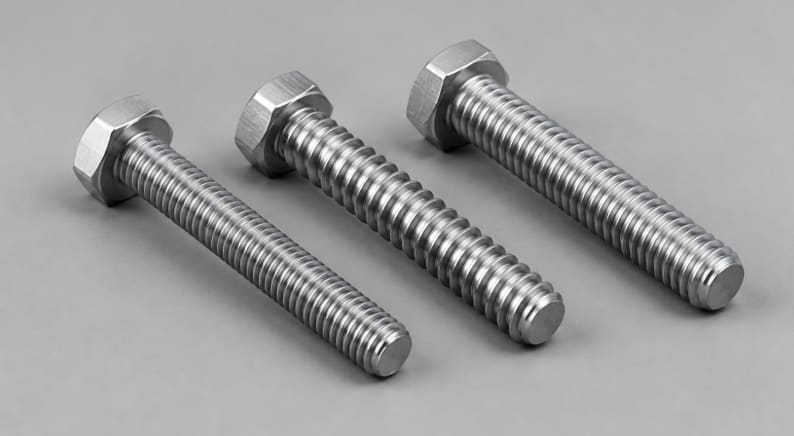
Metric vs UNC/UNF Fasteners: Thread RFQ Checklist

Daniel
With experience in fastener manufacturing and export sales, we specialize in bolts, nuts, screws, self-drilling screws, fully threaded rods, and customized fastening solutions for construction, machinery, automotive, and industrial applications.
A fastener RFQ needs more than a diameter and quantity. For metric, UNC or UNF threads, specify the diameter, pitch or threads per inch, required thread class and mating component. List fastener length separately: it is not part of the pitch or TPI value.
For replacement parts, please use approved drawings or equipment specifications. For new connections, the responsible engineer should define the threads and fit. Then, the procurement department incorporates these requirements into the inquiry and checks the supplier's response.
Metric, UNC and UNF: What Is the Difference?
| Thread system or series | How the thread is specified | Example of an external-thread callout |
|---|---|---|
| Metric M thread | Nominal diameter and pitch in millimetres, plus tolerance class | M10 x 1.5-6g |
| UNC: unified inch coarse-thread series | Nominal diameter in inches, threads per inch (TPI), series and class | 1/4-20 UNC-2A |
| UNF: unified inch fine-thread series | Nominal diameter in inches, TPI, series and class | 1/4-28 UNF-2A |
These examples explain the symbols; They are not inventory lists or recommendations for component specifications.
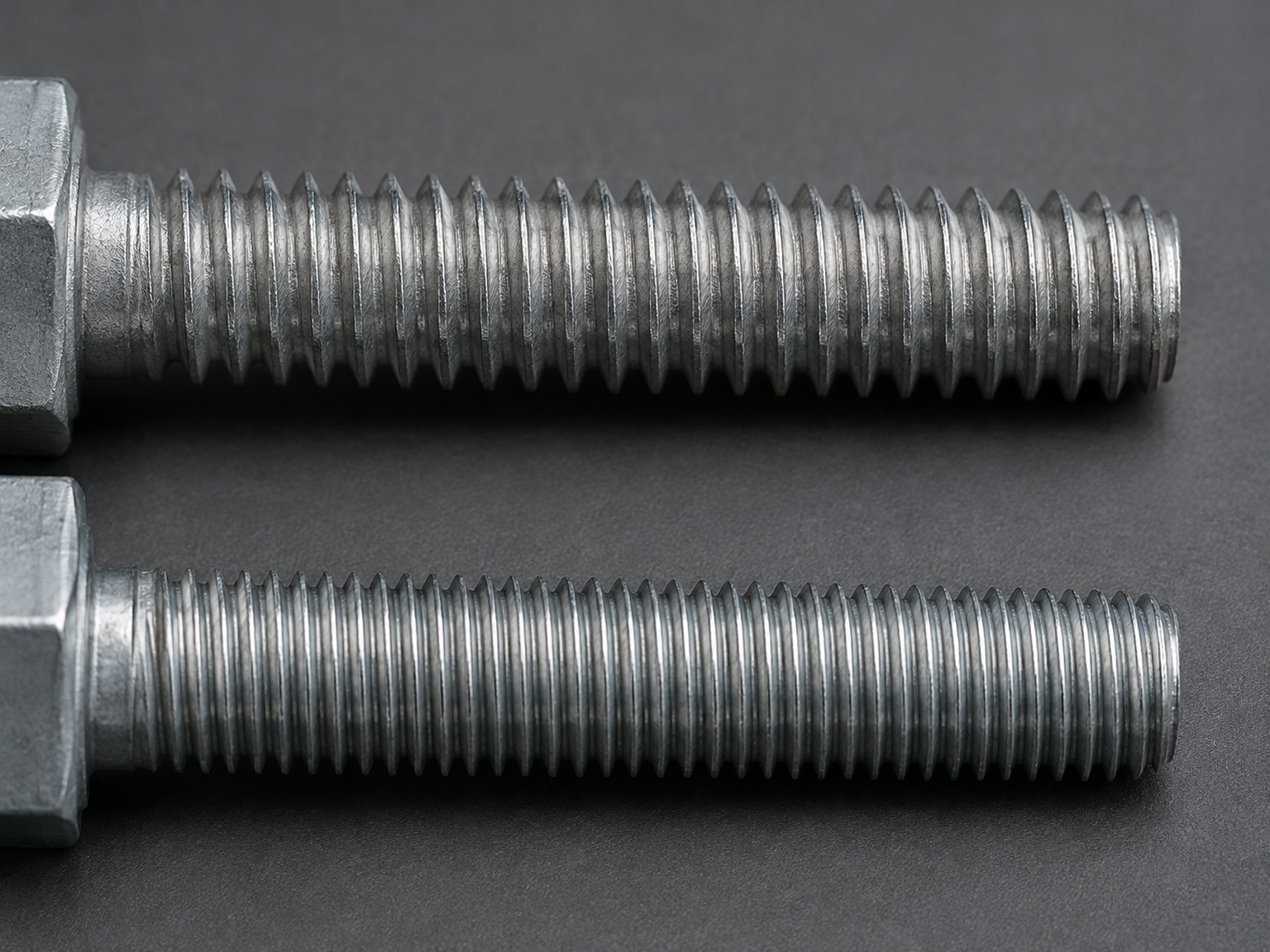
Metric threads also have coarse pitch and fine pitch. Therefore, only 'fine threads' cannot determine the complete thread requirements. For the same nominal inch diameter, UNF has more threads per inch and a smaller pitch than UNC.
This guide covers metric M and UNC/UNF fastening threads, but does not include pipe threads or all other imperial thread systems. Measuring a part in inches does not establish that its thread is UNC or UNF.
Read the Callout Before Comparing Quotations
Metric example: M10 x 1.5-6g
M10identifies a metric M-profile thread with a nominal diameter of 10 mm.1.5is the pitch in millimetres: the axial distance between adjacent thread crests.6gis an external-thread tolerance class, not the material or strength grade.
An internal metric thread has its own specified tolerance class, such as6H. Do not copy the external-thread class into a nut or tapped-hole specification. Retain the intended internal and external requirements from the drawing.
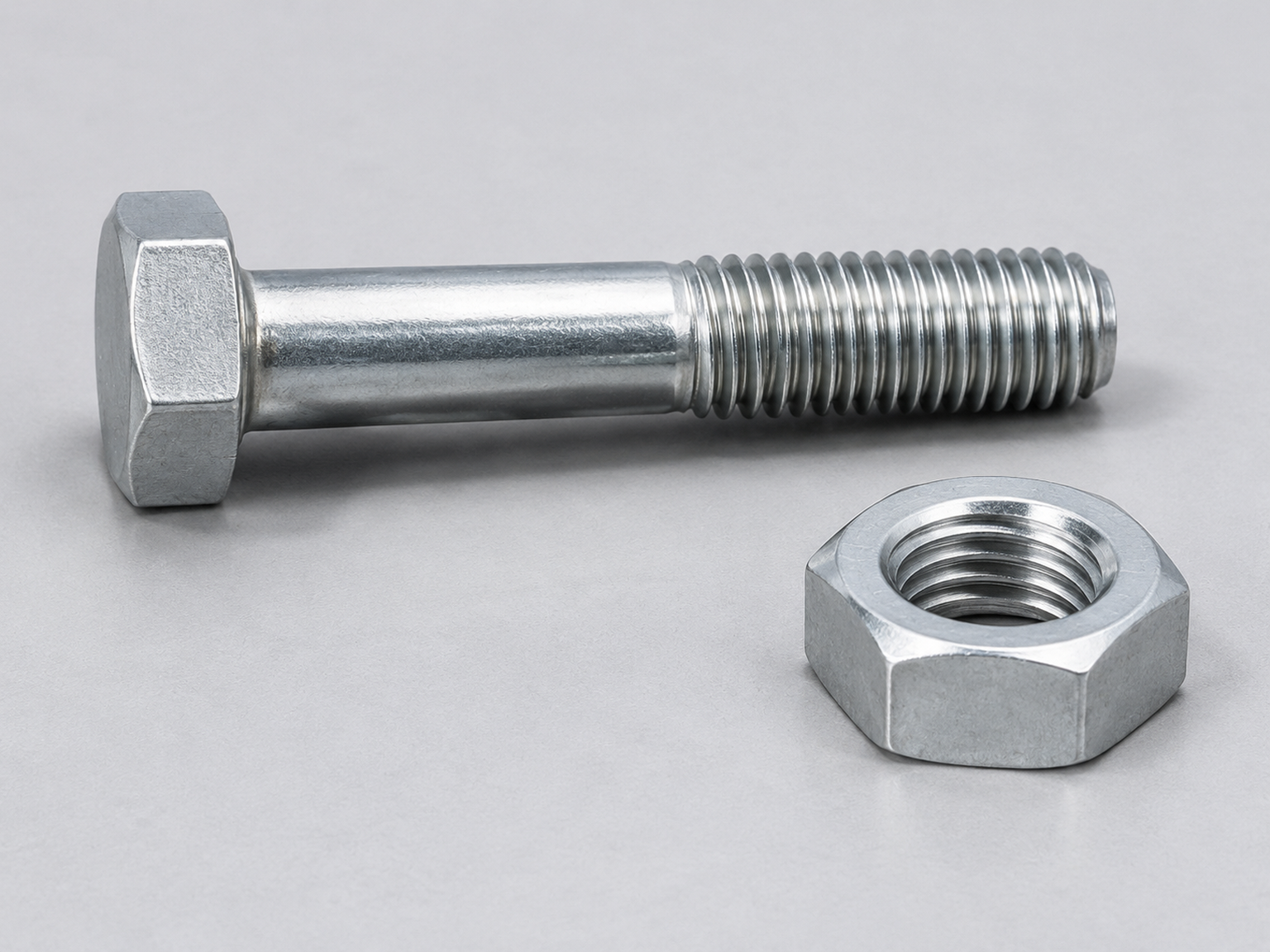
For metric assemblies, buyers can reviewfully threaded DIN 933 / ISO 4017 hex boltsorpartially threaded DIN 931 / ISO 4014 hex bolts, together withDIN 934 / IS 1363 hex nuts, before preparing the RFQ. Confirm each item against the drawing; the linked ranges do not establish that a particular size, grade, thread class or finish is available.
Inch examples: 1/4-20 UNC-2A and 1/4-28 UNF-2A
In these callouts,1/4is the nominal diameter in inches.20and28are threads per inch.UNCandUNFidentify the thread series, while2Aidentifies a Class 2 external thread. Unified internal threads use aBdesignation, such as2B.
Thread class is separate from mechanical strength:2A does not mean SAE Grade 2. Material and the required property class or grade must appear elsewhere in the purchase specification.
The two inch examples share a nominal diameter but have different pitches and are not interchangeable mating threads. Converting the diameter into millimetres does not make either one a metric thread.
For UNC/UNF requirements, see theAmerican Standard Bolts categoryConfirm that the mating nut or tapped component matches the thread system, nominal diameter and TPI, with compatible internal and external thread classes as specified by the drawing. A metric DIN 934 / IS 1363 nut is not a substitute for a UNC/UNF nut.
Which Thread Should the Buyer Specify?
Choose from the connection requirements rather than the general statement that coarse or fine threads are always better.
Approved drawings exist with their complete thread markings, standards and versions (if specified), drawing revisions, and required directions. Annotations for resolving conflicts before ordering.
The replacement part must match the existing nut or threaded hole: confirm the thread system, diameter, pitch or TPI of the component, and the required fit. For blind holes, including the specified available thread depth and assembly constraints.
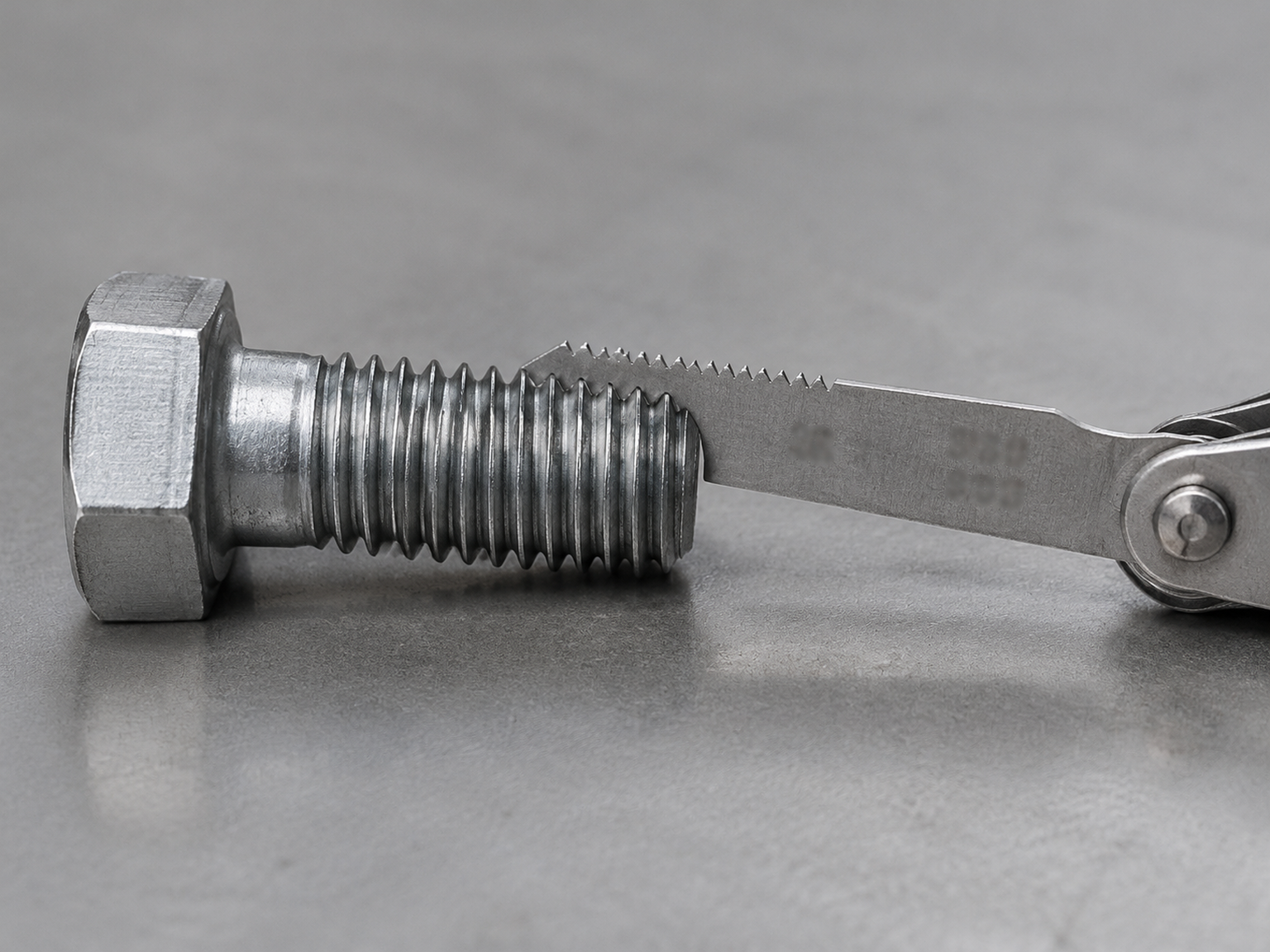
Only provide samples: provide measurement values and detailed information of matching parts for identification. Photos cannot determine pitch, thread grade, or material. The pitch gauge can help identify, but cannot replace acceptance inspection.
The connection is new or undergoing changes: request approval from the engineering department for threads, mating components, and assembly requirements. Price, availability, and pitch alone cannot determine strength or resistance to loosening.
Do not forcefully screw uncertain threads into nuts or holes to check for compatibility. Explain unresolved features in the inquiry, rather than making them unexplained supplier assumptions.
Add details not covered by thread annotations
Geometric shape and length of fasteners. Determine product type, head and driver, applicable size standards, fastener length, and measurement reference. Explain the thread length and any necessary unthreaded parts. For internal threaded parts, distinguish between thread depth and drilling depth; The assembly drawing must define the required thread engagement and clearance.
Material and mechanical requirements. List the material specifications and required performance categories or grades separately. The matching thread size does not prove that replacing different materials or strength grades is reasonable.
Complete surface and thread acceptance. Explain the coating or surface treatment specifications and the conditions under which threads must meet their acceptance requirements. The coating will affect the thread size and clearance. Do not assume that the same tolerance arrangement applies to every surface treatment, nor do you assume that stricter grades will automatically apply.
Check and record. Define the required features, methods, acceptance criteria, sampling, and reporting for the order. Please confirm the scope with the supplier. Manual assembly inspection cannot verify each thread characteristic, and thread inspection cannot determine material or mechanical compliance.
Practical Metric and UNC/UNF Fastener Inquiry List
Use separate query rows for each specification.
| RFQ field | Information to include |
|---|---|
| Part identification | Part number, drawing number, revision and controlling document |
| Product geometry | Fastener type, head/drive, dimensional standard and required edition |
| Thread requirement | Complete callout: system, diameter, pitch or TPI, series where applicable, class and direction |
| Length requirements | Fastener length and datum, threaded length, or specified thread depth |
| Mating parts | Nut or tapped-component specification and relevant assembly drawing |
| Material and strength | Material specification and property class or grade |
| Surface condition | Finish/coating specification and thread acceptance condition |
| Inspection | Required checks, methods, acceptance criteria and records |
| Order details | Quantity per item, packing, destination and requested delivery schedule |
Add this instruction to the inquiry:
Please quote each item against the attached drawing and thread requirements. Identify missing information, proposed deviations and additional charges separately. Confirm the available specification, inspection scope, minimum order conditions and lead time. Do not substitute the thread series, pitch or class without written approval.
If the technical details are still uncertain, please request a budget quotation that clearly identifies these assumptions. Agree to the final requirements before issuing the production order.
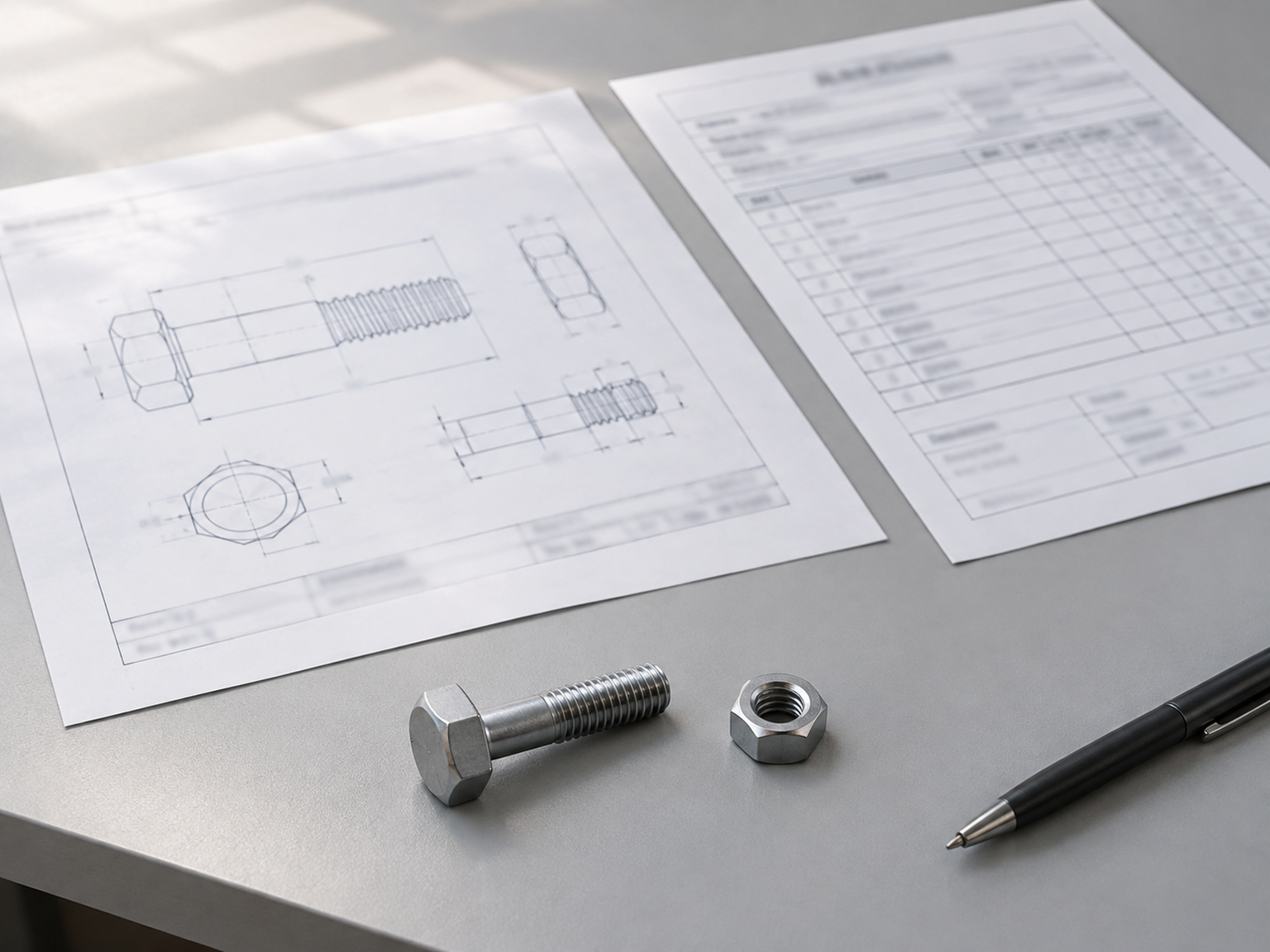
View the reply and confirm the order
Check the supplier's response against each inquiry form. The lack of pitch, thread grade, or material requirements is a clarification item, rather than confirming that the supplier has accepted them.
Resolve differences in thread designation, mating parts, finish, and inspection scope in written form. Include control of drawing revisions and approved deviations in the purchase order. Maintain the same reference for repeat orders, rather than relying on abbreviated invoice descriptions.
Send your drawing or item list to JJ Fastener Factorywith the complete thread requirement, material/grade, finish, lengths, quantity per item and destination.For replacement parts, include the mating-component specification and flag anything still awaiting identification.
Ask for confirmation of the available combination, inspection scope and commercial terms for your inquiry. This checklist supports purchasing communication; it does not provide load ratings, tightening instructions or approval to change a connection design.