How to Compare Fastener Procurement Prices: Moving from Unit Price to Full Lifecycle Cost

Daniel
With experience in fastener manufacturing and export sales, we specialize in bolts, nuts, screws, self-drilling screws, fully threaded rods, and customized fastening solutions for construction, machinery, automotive, and industrial applications.
When quotes differ by a wide margin, what should procurement really worry about?
For the same batch of screws, nuts, or bolts, quotes from different suppliers can differ by 20–30% or even more. Many procurement staff instinctively think, "pick whichever is cheapest," or conversely, "the expensive one must be more reliable." Both instincts can end up costing the company more. Behind quote differences often lie differences in material grade, strength class, forming process, surface treatment, inspection items, and delivery terms. Looking only at unit price makes it easy to compare things that are not actually comparable.
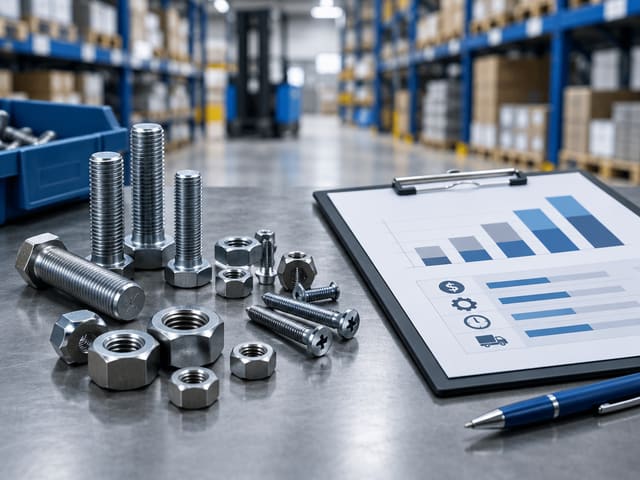
The risks of low-price procurement are not abstract: mismatched specifications that prevent assembly, batch-to-batch quality variation that causes unstable tightening torque, installation rework that adds labor hours, and premature product failure that causes downtime. For critical connections such as steel structures and equipment assembly, a single fastener failure can trigger rework or even a safety incident. Conversely, a high price does not necessarily mean the performance is better suited to the actual operating conditions—buying a corrosion-resistance grade beyond what is needed for ordinary indoor assembly is also a waste. The starting point for procurement evaluation should shift from "unit price" to "total cost."
First align the specifications: what looks like the same item may not be comparable
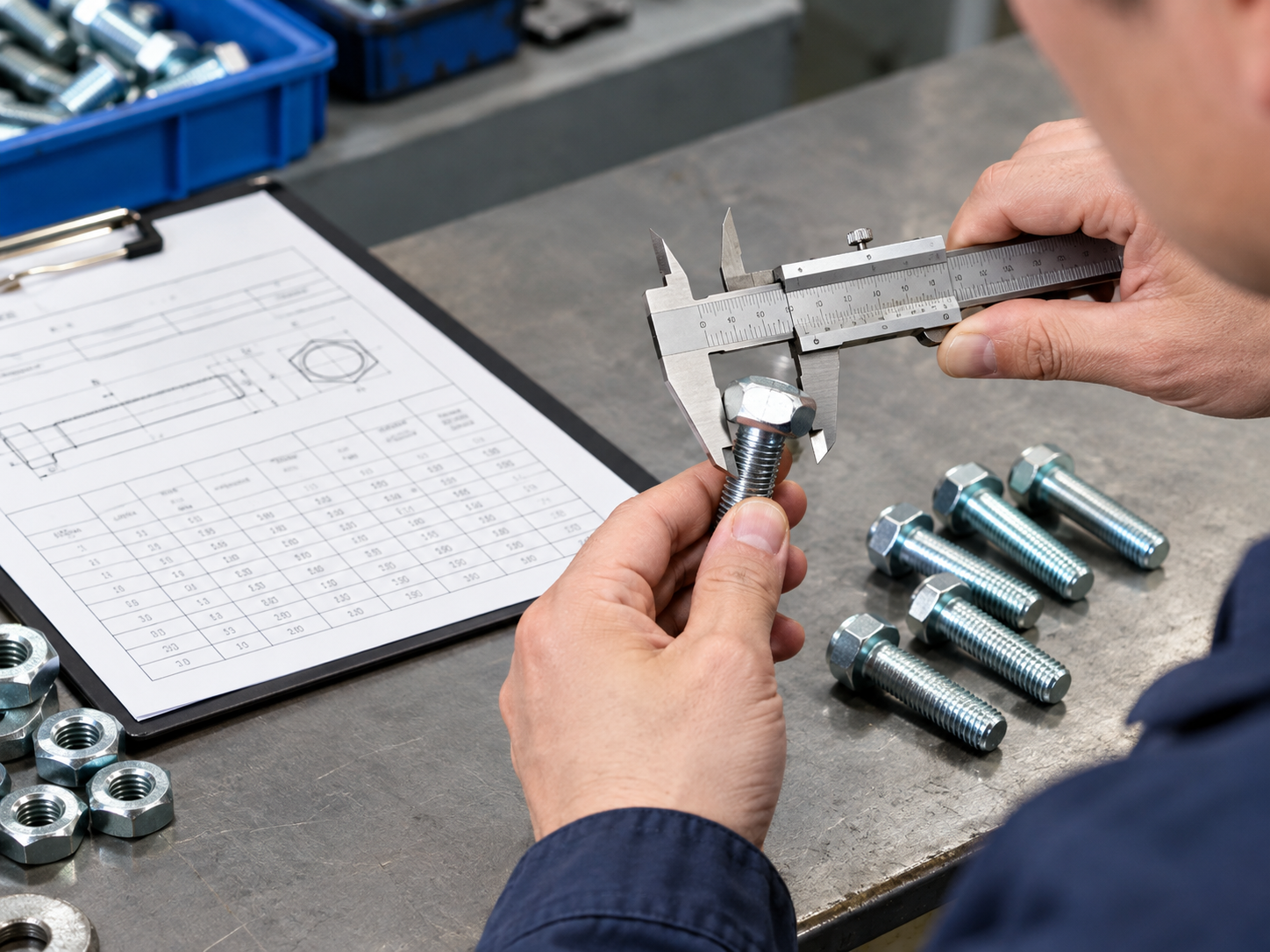
Aligning specifications before comparing prices is the first step toward correcting the bias. Items to verify include: product type, dimensions, tolerances, thread specifications, strength class, material grade, and applicable standards. If any one of these is missing, the quotes are not comparable.
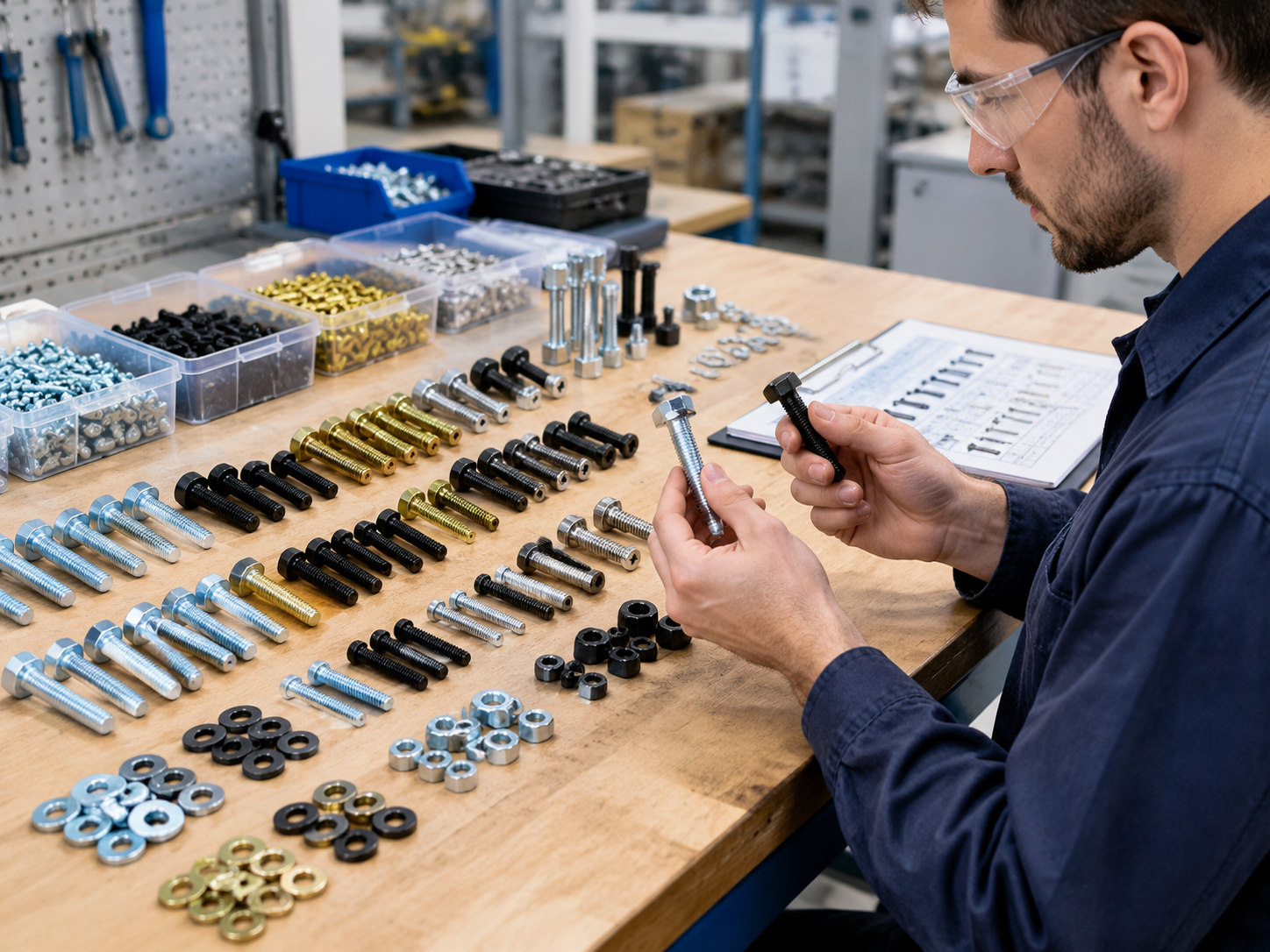
Hex bolts, flange bolts, studs, and ordinary screws differ in structure and use. Flange bolts have a built-in flange, providing a larger bearing area, and are often used in connections that need to distribute pressure; studs are used where nuts are tightened on both ends; ordinary screws are mostly used for general assembly. Judging whether items can substitute for one another based only on appearance or name is a common source of misjudgment in procurement.
When purchasing high-strength bolts, confirm the strength class, heat-treatment condition, mechanical performance indicators, and the standard requirements they are based on. For high-strength connections in steel structures, for example,ASTM A325 heavy hex structural boltsare made of high-strength carbon steel and are suitable for connection nodes in steel structures, bridges, and industrial buildings. Their grade, dimensions, and matching nuts must be verified against the design documents, and they cannot be casually replaced with ordinary hex bolts. For structural products, the applicable standard version should also be confirmed in accordance with project specifications.
Stainless steel fasteners likewise require a clear specification of the exact material and service environment. The corrosion resistance of different grades such as 304, 316, and 316L differs markedly, and judging whether they can be used in humid, coastal, or chemical environments based only on the words "stainless steel" carries high risk. For general mechanical assembly and general industrial scenarios,IS 1363 hex boltsare available in both carbon steel and stainless steel; when purchasing, specify the material according to the actual operating conditions rather than making a vague inquiry.
The real cost of fasteners: from purchase price to service life
Establishing a total-cost framework is the key to making price comparisons solid. At a minimum, the following items should be included:
- Purchase cost: unit price multiplied by quantity; note whether tax and freight are included.
- Transportation and inventory costs: capital tied up by packaging method, minimum order quantity, and lead time.
- Inspection and screening costs: the cost of incoming sampling inspection, full inspection, or screening and rejection.
- Installation labor hours: thread quality and fit accuracy directly affect assembly efficiency.
- Rework and downtime costs: lost production time caused by failure, thread stripping, or loosening.
- Maintenance or replacement costs: premature replacement caused by insufficient corrosion resistance.
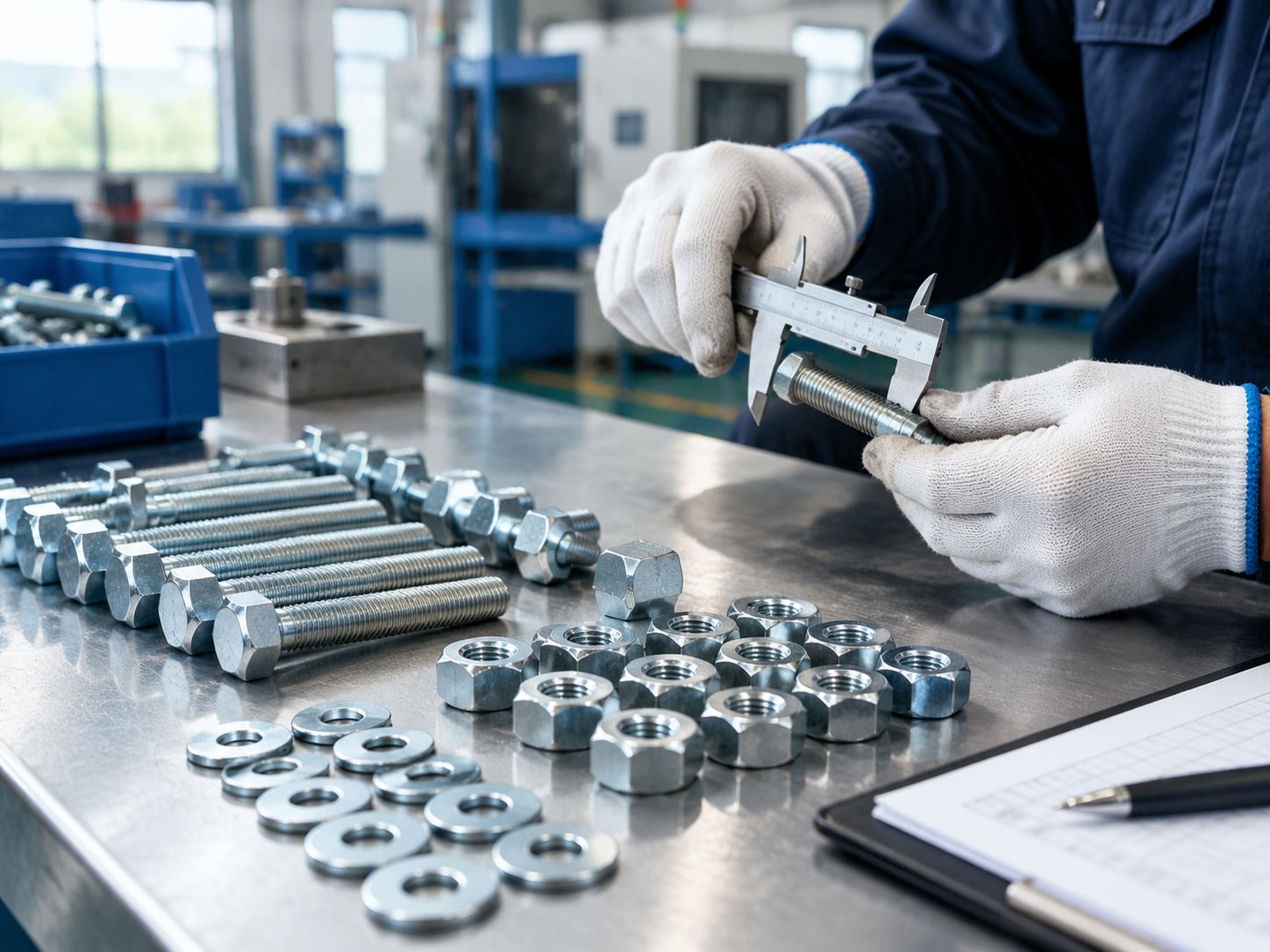
When comparing different quotes, unify quantity, packaging, payment terms, delivery time, inspection requirements, and after-sales scope to avoid missing hidden costs. For high-risk connections, assess the probability and consequences of failure and put quality investment where it matters most; for ordinary applications, do not overpay for performance that is not needed. Through sample testing and small-batch validation, combined with batch traceability, you can effectively reduce the risk of discovering quality deviations only after a large-volume purchase.
Low price does not equal good value: which areas are easily cut?
Low prices often come from cutbacks in certain areas. What procurement needs to watch is: whether the raw material source is stable, whether forming and heat-treatment processes are adequate, whether surface treatment meets standards, whether dimensional consistency is controlled, and whether factory inspection is complete. These areas are invisible but determine performance on the assembly floor.
The matching relationship between nuts and bolts deserves particular scrutiny. Poor thread quality and fit accuracy can cause thread stripping, loosening, or reduced installation efficiency, ultimately costing in labor hours more than the purchase price difference saved. Surface treatments such as hot-dip galvanizing should be comprehensively evaluated in light of corrosion-resistance requirements, the effect of the coating on thread dimensions, and application conditions; quality should not be judged solely by the coating name.
When requesting quotes, require suppliers to explain inspection items, batch identification methods, and exception-handling procedures. For critical products, agree on sampling ratios or third-party testing and write quality responsibilities into the contract rather than leaving them as verbal promises.
High prices can also be unreasonable: how can procurement identify premiums?
To identify a premium, first confirm whether the quote corresponds to clear standards, materials, grades, inspection reports, certification requirements, and delivery services. Vague phrases such as "high quality" or "imported process" cannot serve as a basis for a premium.
Second, break the quote down into comparable items: whether special packaging, inventory guarantees, expedited lead times, and custom processes are truly necessary, and how much each costs. For stainless steel fasteners, non-standard parts, or small-batch custom parts, mold costs, process changeovers, inspection costs, and minimum order quantities all materially affect the unit price; only by understanding these components can you judge whether a quote is reasonable.
It is necessary to establish a price reference by requesting quotes for the same specifications from multiple fastener suppliers, but the lowest quote should not be used directly as the final decision basis. Price is only one line in the total-cost account.
Choose products by application scenario: from hex bolts to stainless steel fasteners
Different scenarios place very different requirements on fasteners, so selection should return to the working conditions themselves.
- Steel structure connections: prioritize checking the bolt grade, dimensions, and matching nuts specified in the design documents; do not substitute ordinary hex bolts for the designated structural fasteners.
- Equipment and piping connections: compare the structural suitability of hex bolts and flange bolts, and confirm load-bearing requirements, installation space, and assembly method.
- Damp, corrosive, or outdoor environments: select materials based on the medium, temperature, and maintenance conditions; stainless steel fasteners are not a universal answer for all corrosive environments.
- Wall or substrate fixing: select expansion bolts according to the substrate type and load, and check the installation conditions and product instructions.
- Vibrating connections: evaluate anti-loosening solutions such as lock nuts, and confirm that they match the bolt specifications, working conditions, and maintenance method.
The core logic of selection is "sufficient and reliable," not "the more expensive, the safer" or "the cheaper, the more economical."
Screening fastener manufacturers and suppliers: look beyond quotations to delivery capability
When evaluating a fastener manufacturer, check whether it has stable raw material management, production process control, inspection capability, and batch traceability mechanisms. These capabilities determine whether quality can remain consistent during bulk supply.
When requesting quotations, provide complete drawings, standards, quantities, applications, surface treatments, and acceptance requirements so that fastener suppliers quote on the same basis; this is the prerequisite for obtaining comparable prices. Matching suppliers by category is equally important: when evaluating hex bolt manufacturers, flange bolt suppliers, or heavy hex nut manufacturers, focus on verifying their production experience and quality control level for the corresponding products, rather than looking only at the overall quotation.
For exports, customization, or bulk supply, further confirm document support capability, delivery stability, packaging and labeling specifications, and exception response processes. These soft capabilities often show their value only when a problem arises in the first cooperation.
Special procurement needs: how to verify pricing for custom, non-standard, and export items
The pricing logic for customized requirements differs from that for standard parts, and the requirements must first be clearly written down. For needs such as custom socket head screws, self-tapping screw manufacturers, and self-drilling screw suppliers, clarify drawings, materials, surface treatment, performance indicators, and acceptance standards before discussing price.
For custom special-shaped fasteners, non-standard fastener processing, and fastener OEM contract manufacturing, sampling fees, mold investment, process validation, testing costs, and minimum order quantities must all be included in the cost evaluation. Comparing only unit prices easily overlooks how upfront investment is allocated.
For projects involving export of inch-standard bolts and fastener export suppliers, confirm in advance the standard version, document requirements, packaging method, and relevant requirements of the destination market. In scenarios such as custom bolt wholesale, carriage bolt factories, or machine screw wholesale, specifications and quality requirements should likewise be unified first before comparing prices; otherwise, price comparison itself is meaningless.
Procurement decision checklist: replace price intuition with verifiable data
To put the above approach into practice, start with an inquiry template: list product name, dimensions, standard, material, grade, surface treatment, quantity, delivery time, and acceptance requirements. Only when all suppliers quote according to the same template are prices comparable.
For carbon steel nut factories, lock nut suppliers, high-strength bolt manufacturers, and hot-dip galvanized bolt suppliers, verify the quality documents and supply capability for the corresponding category separately, rather than applying one set of standards to all categories. In daily management, record the incoming inspection pass rate, assembly efficiency, exception response speed, on-time delivery rate, and actual replacement cost, and regularly review supplier performance, letting the data speak.
The conclusion is not complicated: neither pursue cheapness blindly nor choose the most expensive blindly. On the premise of meeting performance and compliance requirements, choosing the solution with lower total lifecycle cost and more reliable supply is the proper way to make fastener procurement decisions.