Fastener Procurement Total Lifecycle Cost Comparison: How to Choose Between Imported Brands and Domestic Alternatives

Daniel
With experience in fastener manufacturing and export sales, we specialize in bolts, nuts, screws, self-drilling screws, fully threaded rods, and customized fastening solutions for construction, machinery, automotive, and industrial applications.
Fastener Procurement: Imported Brands vs Domestic Alternatives—How Can B2B Buyers Compare Total Cost of Ownership?
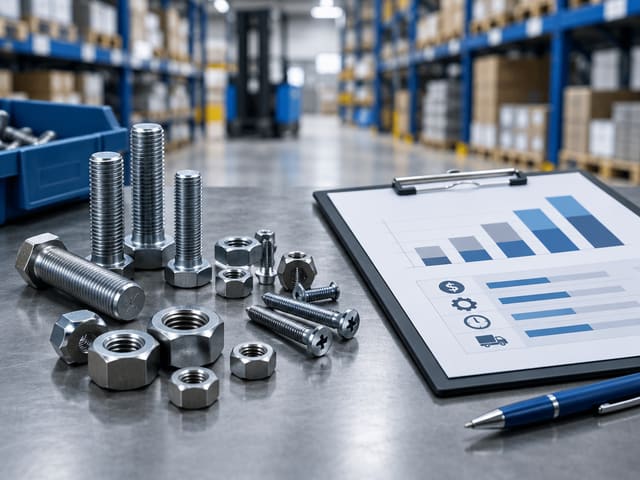
In manufacturing and infrastructure projects, procuring screws, nuts, and bolts may seem routine, but the unit price on a quotation often is not what truly determines cost. The choice between imported brands and domestic alternatives involves quality consistency, delivery lead times, inventory strategy, installation processes, and even equipment downtime risk. For B2B buyers, establishing a total cost of ownership comparison framework reflects actual spending better than simply comparing prices.
Why Unit Price Alone Is Not Enough: Common Pain Points in Procurement Decisions
Price differences among screws, nuts, and bolts are only one part of cost. Downtime, rework, inventory carrying costs, and delivery delays also erode profit. For example, if a batch of low-priced bolts causes loose connections due to insufficient strength, subsequent repair costs, production losses, and customer claims may far exceed the amount saved on procurement. If connections on high-load equipment become loose or fail, they may create maintenance and shutdown risks, and selection and installation processes are equally important—improper preload control, thread fit deviations, or mismatched surface treatments can prevent even the best fasteners from delivering expected performance.
When evaluating a specific connection solution, Superbolt-related materials may be referenced, but it should be stated that they belong to a specific connection solution and their effects should not be generalized as a performance guarantee for all fasteners. Procurement decisions should be based on specific operating conditions, validation data, and supplier capabilities, rather than the promotional claims of a single product.
First Define the Comparison Object: Are Imported Brands and Domestic Alternatives Truly the Same Specification?
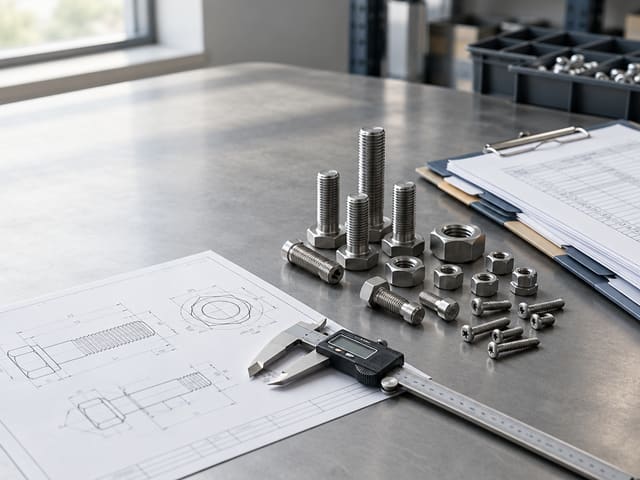
Before comparing imported brands with domestic alternatives, it is necessary to check item by item the material, strength grade, dimensional tolerances, threads, surface treatment, standards, and batch traceability requirements. Comparing prices based only on "same specification" or "same name" can easily overlook key differences. For example, for hex bolts both nominally rated 8.8, different fastener manufacturers may differ significantly in raw material control, heat treatment processes, and inspection standards.
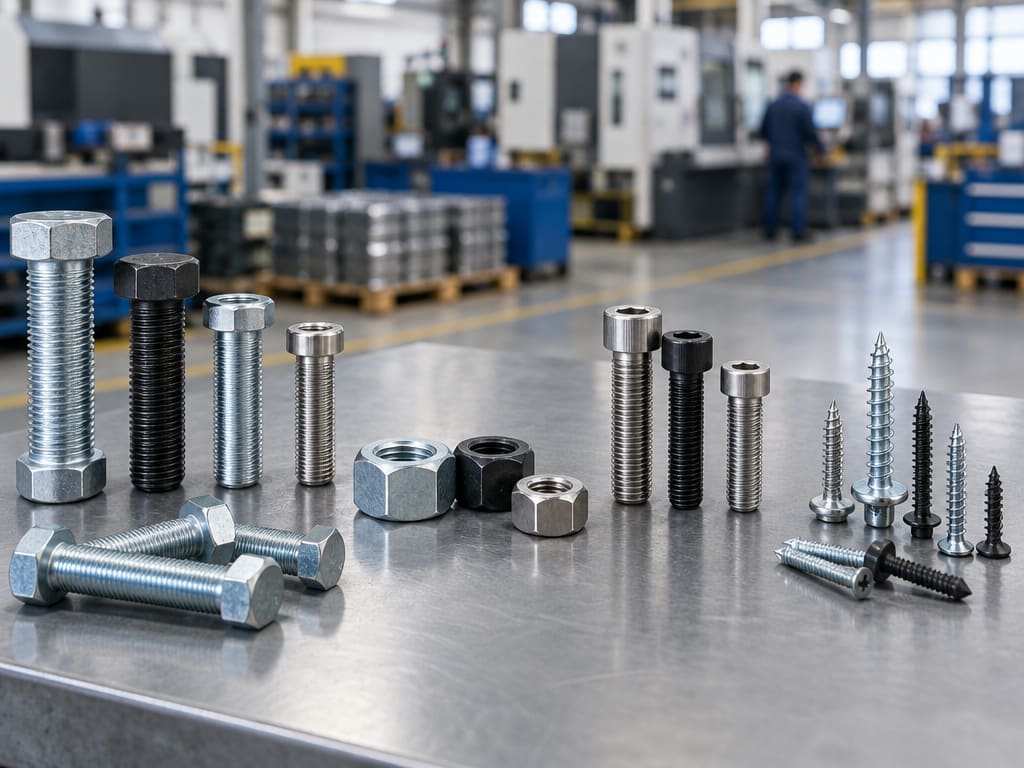
Distinguish among hex bolts, flange bolts, studs, stainless steel fasteners, and matching nuts by application scenario, and avoid comparing prices based only on names. For custom special-shaped fasteners and non-standard fastener machining, sample validation, drawing confirmation, and acceptance standards should be included as preconditions for procurement. Take DIN 571 hex head wood screws as an example: this product is available in carbon steel and stainless steel and is suitable for wooden structure construction and bracket installation. During procurement, the material, thread specifications, and surface treatment requirements must be clearly specified, rather than simply comparing the price per thousand pieces.
Similarly, DIN 6334 hex connection nuts are used to connect threaded rods in support systems, and their length, thread precision, and material directly affect connection reliability. When comparing imported and domestic solutions, suppliers should be required to provide material certificates, dimensional inspection reports, and batch traceability information to ensure that the objects being compared are truly equivalent at the technical level.
Establish a Total Cost of Ownership Model
A total cost of ownership model should cover the following dimensions:
- Procurement cost:Unit price, mold or customization fees, minimum order quantity, transportation, tariffs, and exchange rate effects. For custom bolt wholesale or socket head cap screw customization, mold amortization and minimum order quantities are often underestimated.
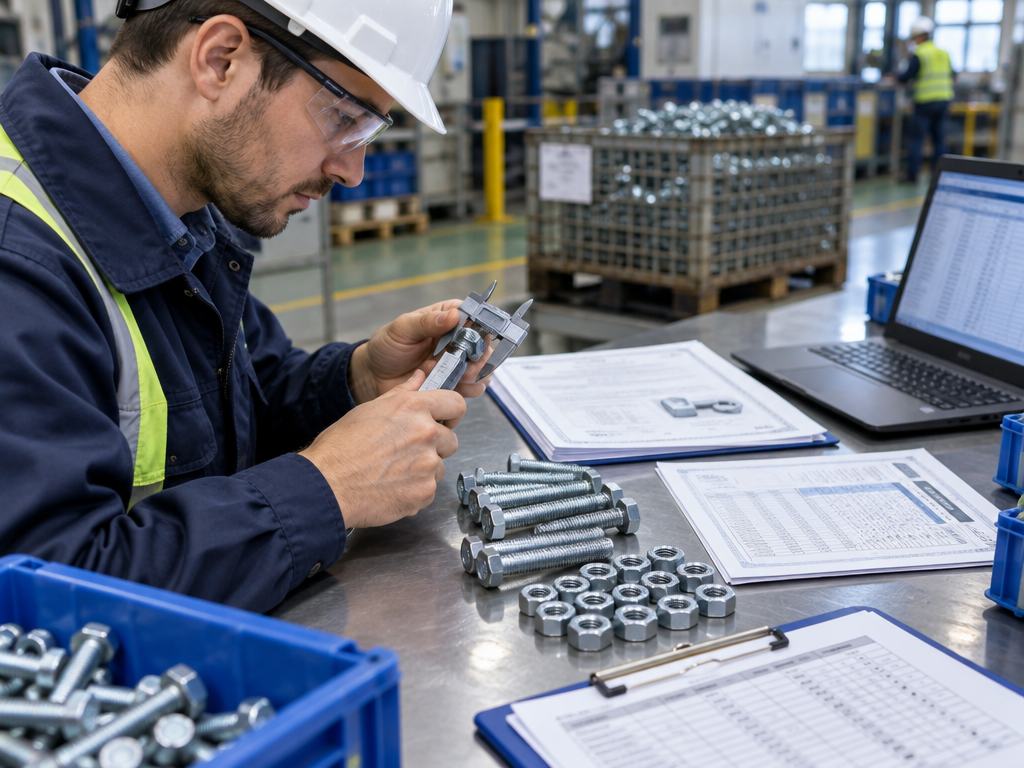
- Quality cost:Incoming inspection, failure rate, rework, scrapping, after-sales handling, and quality traceability costs. A production line stoppage caused by failed incoming inspection may result in losses several times the procurement price difference.
- Operating cost:Safety stock caused by delivery fluctuations, capital tied up in warehousing, line stoppages due to material shortages, and equipment maintenance costs. When imported brands have longer lead times, companies often need to increase safety stock, and this tied-up capital should be included in the total cost.
- Usage cost:Installation labor hours, tool requirements, preload control, maintenance cycles, and replacement frequency. For example, if products provided by a lock nut supplier require special tools or additional installation labor, usage costs will rise significantly.
It is recommended to compare total cost of ownership using a unified period and unified demand volume, and to conduct scenario analysis on key variables such as price, delivery time, and failure rate. For example, separately simulate changes in total cost when delivery is extended by two weeks, the failure rate rises by 0.5%, or the exchange rate fluctuates by 5%, helping the procurement team identify sensitive variables.
Imported Brands and Domestic Alternatives: Evaluate by Scenario, Not by Sweeping Generalizations
For imported brands, focus on evaluating technical documentation, experience in special applications, global supply capability, and certification requirements, while also accounting for longer lead times, exchange rates, and supply interruption risks. For projects involving exports of inch-series bolts or requiring specific industry certifications, the completeness of imported brands' technical documentation may be more advantageous.
For domestic alternatives, focus on verifying local responsiveness, delivery flexibility, customization capability, and overall cost; quality cannot be judged as better or worse based solely on country of origin. Many domestic high-strength bolt manufacturers and stainless steel fastener manufacturers already have comprehensive quality systems and testing capabilities and can meet the needs of most industrial scenarios.
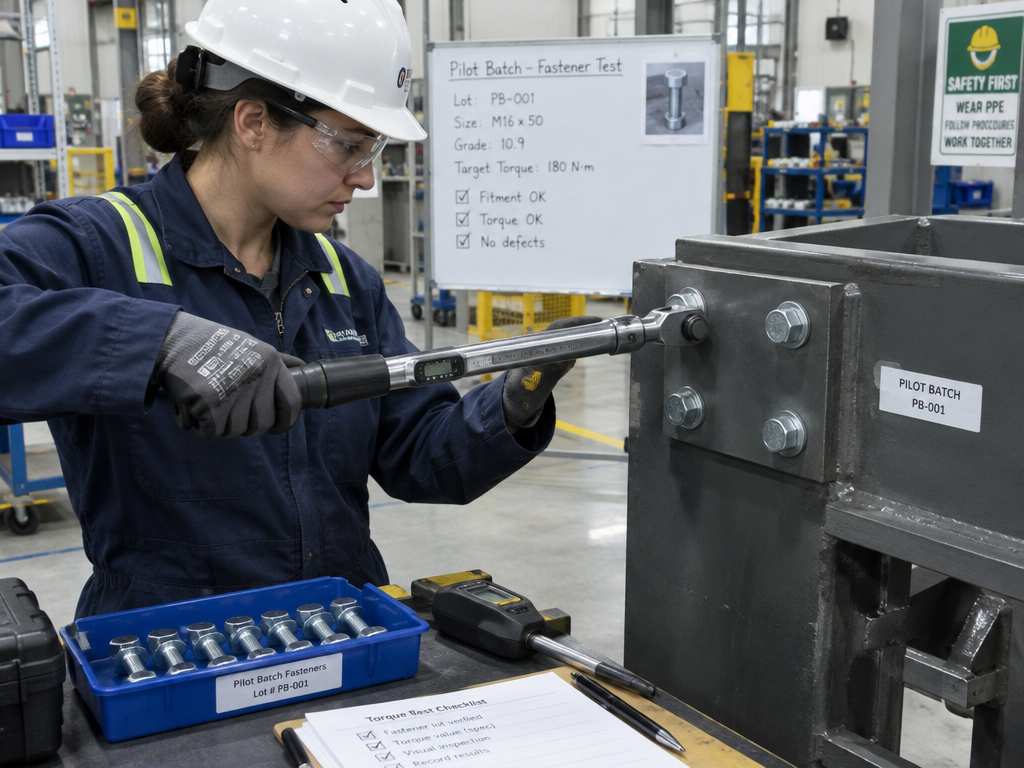
For high-strength bolts, stainless steel fasteners, or critical load-bearing connections, complete material and performance validation first, then decide whether to expand the substitution ratio. Reduce switching risk through small-batch trials, first-article approval, process audits, and batch tracking, and set clear thresholds for scaling up. For example, the first trial batch must meet the agreed pass rate and have zero on-site failures before proceeding to the next stage of volume ramp-up.
Supplier Evaluation: Extend from Quotations to Delivery and Quality Capability
Verify the quality system, testing equipment, raw material management, production capacity, and abnormal-response mechanisms of the fastener manufacturer or fastener supplier. For hex bolt manufacturers, flange bolt suppliers, heavy hex nut manufacturers, or lock nut suppliers, set audit priorities by product category. For example, heavy hex nut manufacturers should be focused on heat treatment processes and thread precision, while flange bolt suppliers need attention on flange face flatness and sealing performance.
When inch-series bolt exports, fastener OEM contract manufacturing, or fastener export suppliers are involved, confirm applicable standards, documentation, packaging, and traceability requirements. Select partners by category, such as carriage bolt factories, expansion bolt wholesale, self-tapping screw manufacturers, or self-drilling screw suppliers, and verify their actual manufacturing or supply scope. Some traders quote in the name of a factory, and their actual production capacity and process control capability need to be confirmed through on-site audits or video factory inspections.
For carbon steel nut factories and hot-dip galvanized bolt suppliers, special attention should be paid to the match between surface treatment quality and the usage environment. Hot-dip galvanized bolts perform excellently outdoors or in humid environments, but if used in precision assembly scenarios, coating thickness may affect fit accuracy.
Customization and Multi-Category Procurement: Control Complexity and Hidden Costs
For socket head cap screw customization, special-shaped fastener customization, and non-standard fastener machining, drawing versions, key dimensions, inspection methods, and change procedures should be clearly specified. Poor drawing version management may lead to dimensional deviations between batches, which can then cause assembly problems. It is recommended to stipulate change notification deadlines and first-article approval procedures in the contract.
Procurement needs such as machine screw wholesale and custom bolt wholesale should compare packaging, phased delivery, inventory assurance, and mixed-batch management costs at the same time. Improper mixed-batch management may lead to products from different batches being used together, affecting traceability and performance consistency.
Select carbon steel nut factories, hot-dip galvanized bolt suppliers, or stainless steel fastener manufacturers according to application requirements to avoid a mismatch between surface treatment and the operating environment. For example, stainless steel fasteners have greater corrosion resistance advantages in chemical or marine environments, while carbon steel galvanized solutions are lower cost in dry indoor environments.
Validate replacement effects with data: pilot, track, review
Establish a pilot baseline and record the incoming qualification rate, assembly labor hours, on-site failures, replenishment cycle, and comprehensive cost per thousand pieces. Track the performance of key categories such as screws, nuts, and bolts by batch, distinguishing product issues, installation issues, and changes in operating conditions. For example, if a batch of bolts loosens after assembly, it is necessary to determine whether the cause is insufficient preload, a thread fit problem, or operating vibration exceeding expectations.
The existing materials do not provide verifiable industry savings ratios or specific ROI cases; the article should avoid fabricating data and may use actual customer pilot results to demonstrate benefits. It is recommended that the procurement team keep complete records during the pilot phase, including incoming inspection reports, assembly records, and on-site feedback, to provide a basis for subsequent scale-up decisions.
Procurement decision checklist: when to import, when to substitute domestically
- First meet safety, regulatory, certification, and equipment compatibility requirements, then compare lifecycle costs.
- When key operating conditions or validation data are insufficient, the imported solution may be retained while domestic substitution testing is carried out in parallel.
- When performance validation is passed, supply is stable, and the total cost advantage is clear, expand domestic procurement in phases while retaining alternative supply channels.
- Pay long-term attention to changes in infrastructure and manufacturing demand, but do not replace specific product, supplier, and project data with macroeconomic trends.
For B2B buyers, imported brands and domestic substitutes are not an either-or choice. By establishing a full lifecycle cost model, clearly defining the comparison objects, evaluating supplier capabilities by scenario, and accumulating data during pilots, procurement teams can optimize total cost while controlling risk. Whether it is hex bolts, flange bolts, stainless steel fasteners, or custom non-standard parts, the core of the decision is always: on the premise of meeting technical requirements, support long-term cooperation choices with verifiable data.