Do Flange Bolts Need Washers? DIN 6921 Buyer's Guide

Daniel
With experience in fastener manufacturing and export sales, we specialize in bolts, nuts, screws, self-drilling screws, fully threaded rods, and customized fastening solutions for construction, machinery, automotive, and industrial applications.
Not necessarily. A flange bolt can be used without a separate flat washer when the joint design permits direct contact between the flange and the connected part. It does not automatically replace a washer specified for bearing support, locking, sealing or electrical isolation.
For a replacement order, follow the approved drawing or bill of materials. If it specifies a hex bolt and washer, obtain technical approval before changing that arrangement. This checklist helps buyers prepare that review; it is not an installation specification.
1. Identify What the Washer Does
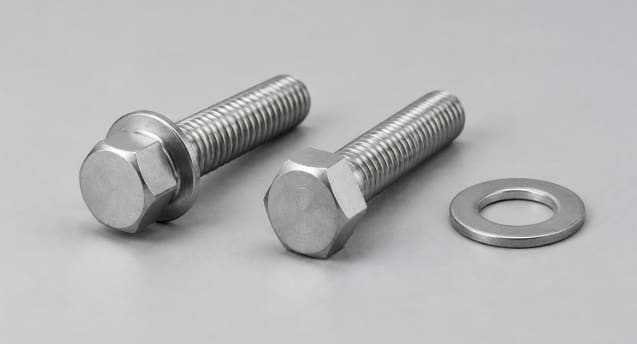
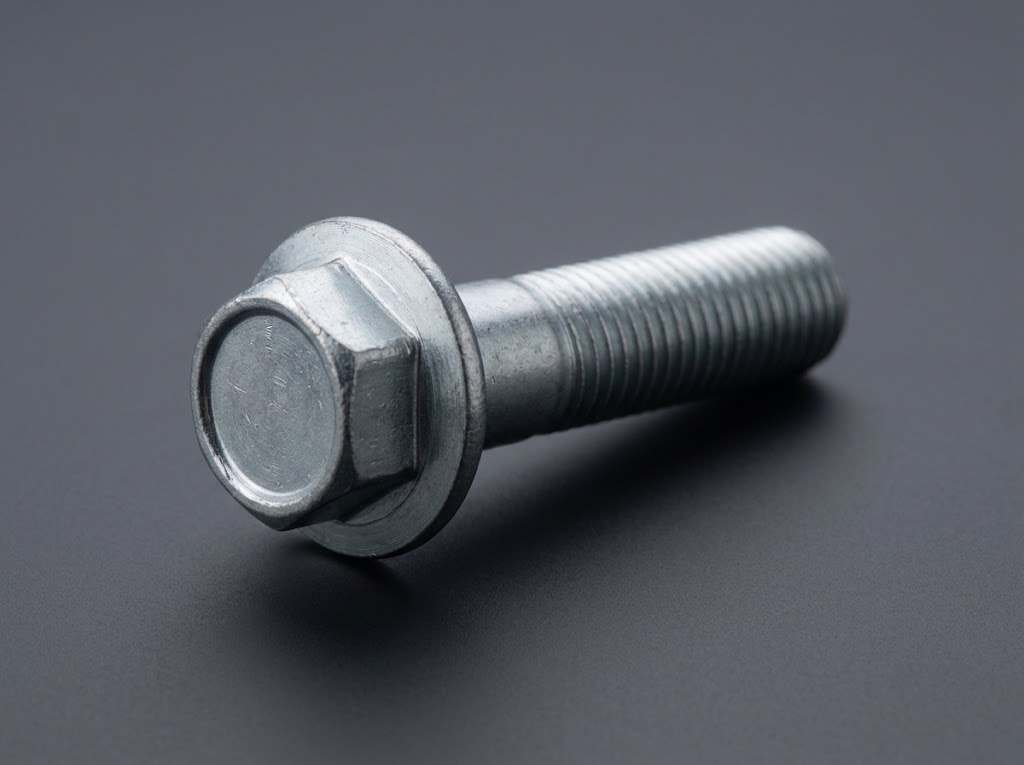
A hex flange bolt has an integral bearing surface beneath its head. A separate washer has its own dimensions, material and hardness requirements, which may be important to the connection.
Before removing a washer, establish whether it:
• Provides the bearing area or interface required by the design. • Forms part of a specified locking, sealing or isolation arrangement. • Is required beneath the bolt head, the nut, or both.
A flange under the bolt head does not determine the washer requirement on the nut side. If the washer's function is unclear, keep it in the purchase specification until the responsible technical reviewer confirms the arrangement.
2. Check the Bearing Surface and Hole Geometry
Direct flange contact requires more than a flange that appears to cover the hole. Provide the connected-part material and thickness, the hole or slot dimensions, and the flange dimensions for review.
Thin Sheet and Pressure-Sensitive Materials
Check whether the contact area can support the required clamping force without unacceptable local deformation. Bossard'ssurface-pressure guidancewarns that excessive surface pressure can cause seating effects and loosening.
Do not assume that a flange alone makes a thin sheet or aluminium connection suitable. A specified washer or other bearing arrangement may still be required.
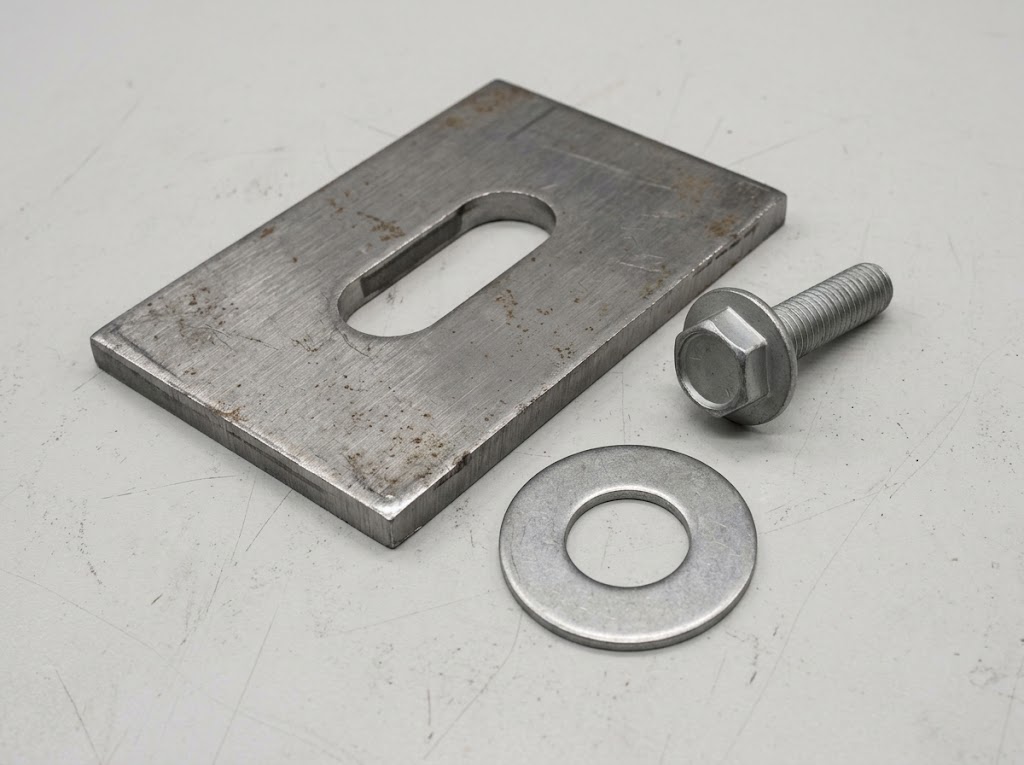
Slotted or Oversized Holes
Check support beneath the flange throughout the permitted adjustment range, including positions near slot ends and edges. Do not delete a larger washer or plate simply because a flange bolt covers the opening in one position.
Coated Surfaces and Restricted Space
State any restrictions on coating damage, contact marks or electrical contact. Check clearance for the flange and installation tool. A matching thread diameter and bolt length do not establish that a different head-and-bearing arrangement will fit or function correctly.
3. Define the Flange Face and Any Locking Requirement
Include the required bearing-face design in the drawing or purchase specification. Where a smooth or serrated face is required, identify it explicitly and have the supplier confirm it against the specified standard and drawing. Do not assume that either version is interchangeable or available under the same product listing.
A catalogue photograph does not establish standard compliance, serration geometry or resistance to vibration loosening. If locking performance is required, specify the approved locking arrangement and acceptance evidence. Adding a washer beneath a serrated flange, or removing one from that arrangement, also requires review.
4. Compare the Complete Replacement Assembly
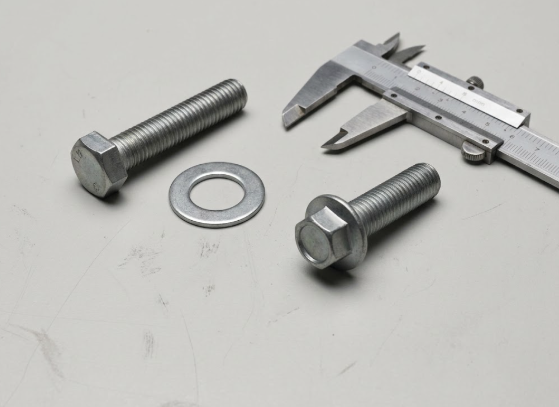
When replacing aDIN 933 hex boltand washer, check:
Head and flange dimensions, bearing contact and tool clearance.
Bolt length, thread length, thread engagement and projection.
Blind-hole depth, where applicable.
Material, property class, coating and lubrication requirements.
The nut and any remaining washer or locking component.
Removing a washer changes the clamped stack. Recheck the assembly dimensions rather than automatically retaining the previous bolt length.
Tightening instructions need review if the bearing arrangement, coating or lubrication changes. Do not transfer the old torque value without confirming its applicability. Bossard'spreload and torque guidancedescribes its reference values as approximate and not a substitute for VDI 2230 calculations.
Also identify the required standard edition. DIN Media listsDIN 6921:1983-06 as withdrawn, with DIN EN 1665 replacement entries. That catalogue relationship does not establish dimensional interchangeability or approve a substitution on a legacy drawing.
5. Use Product Ranges as an Inquiry Starting Point
JJ Fastener Factory'sDIN 6921 product informationlists carbon steel bolts in property classes 4.8 and 8.8, with thread diameters from M6 to M16 and lengths from 10 mm to 100 mm.
These are published product ranges, not confirmation that every size, length, class, finish and flange-face combination is available. Request confirmation for each RFQ line item.
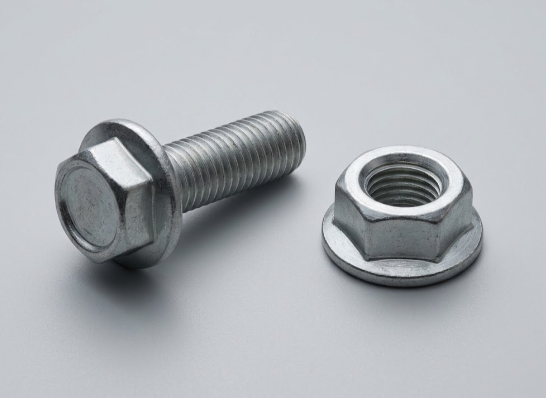
JJ'sDIN 6923 carbon steel flange nut rangelists thread sizes M5, M6, M8, M10, M12, M14, M16 and M20, with property class options 8, 10 and 12. The product page includes coarse-thread and selected fine-thread options; check the pitch listed for the required size rather than assuming every size has the same options.
For a bolt-and-nut inquiry, specify the nut's thread size, pitch, property class, bearing-face design, finish and quantity. Confirm the requested combination against the bolt and assembly requirements; the catalogue options do not, by themselves, establish compatibility or current stock.
6. Send an RFQ That Defines the Joint
Include:
• The applicable standard and edition, drawing revision and existing assembly specification. • Bolt diameter, pitch, length, property class and required bearing-face design. • Connected-part material, thickness, hole or slot dimensions, and contact-surface condition. • Coating, lubrication and specified inspection documents. • Nuts, washers and locking components as separate items, with quantities. • Quantity per size, packing requirements and delivery destination
For a substitution inquiry, attach the existing bolt-and-washer arrangement and the proposed flange-bolt arrangement. Ask the supplier to identify unavailable items and deviations separately.
Contact JJ Fastener Factorywith those details for order-specific confirmation. Keep supplier availability confirmation separate from the technical approval of the joint, and resolve both before releasing the order.