B2B Platform Procurement or Direct Factory Sourcing? A Guide to Fastener Selection and Supplier Evaluation

Daniel
With experience in fastener manufacturing and export sales, we specialize in bolts, nuts, screws, self-drilling screws, fully threaded rods, and customized fastening solutions for construction, machinery, automotive, and industrial applications.
Procurement Pitfalls: Choosing the Wrong Fasteners Is Not Just a Price Issue
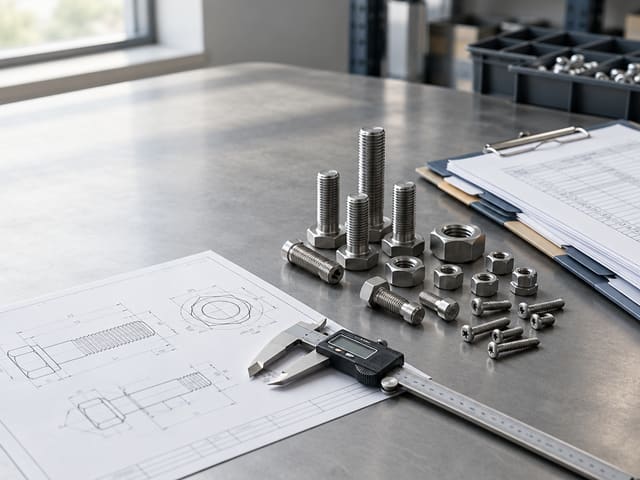
Parts such as screws, nuts, bolts, and studs may all look like standard components, but when it comes to actually placing an order, the information that needs to be verified is far more than one might imagine: whether the material is carbon steel or stainless steel, whether the strength grade is 4.8, 8.8, or 10.9, whether the thread specifications and dimensional tolerances match the drawings, whether the surface treatment is black oxide, zinc plating, or hot-dip galvanizing, and whether the governing standard is GB, DIN, or ANSI. If any one of these does not match, problems can arise on the assembly floor.
What is even more troublesome is batch consistency. With the same fastener supplier, the first batch may meet dimensional requirements and anti-corrosion standards, while the second batch may suffer from insufficient hardness or inadequate coating thickness. At best, this leads to assembly rework; at worst, it causes equipment downtime, project delays, and additional inspection and sorting costs. For applications involving corrosion, vibration, or high-load conditions, the importance of selection and batch traceability far exceeds that of unit price itself.
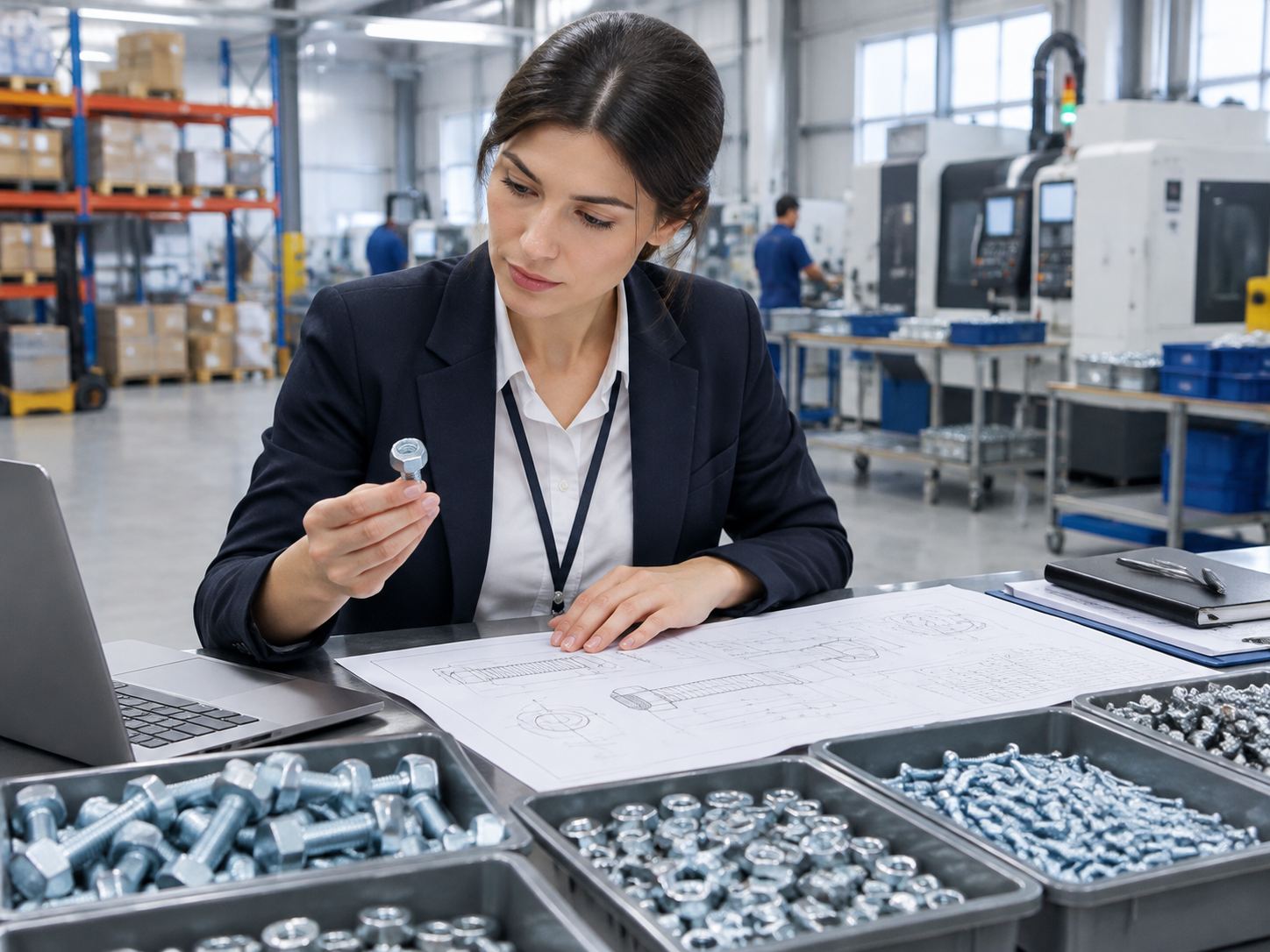
Therefore, when purchasing fasteners, one cannot look only at the name and quotation. Instead, one must first clarify the operating conditions and then decide through which channel to purchase. This is also the core question discussed in this article: what kinds of companies are respectively suited to B2B fastener platforms versus direct procurement from fastener manufacturers.
What Are the Two Procurement Models?
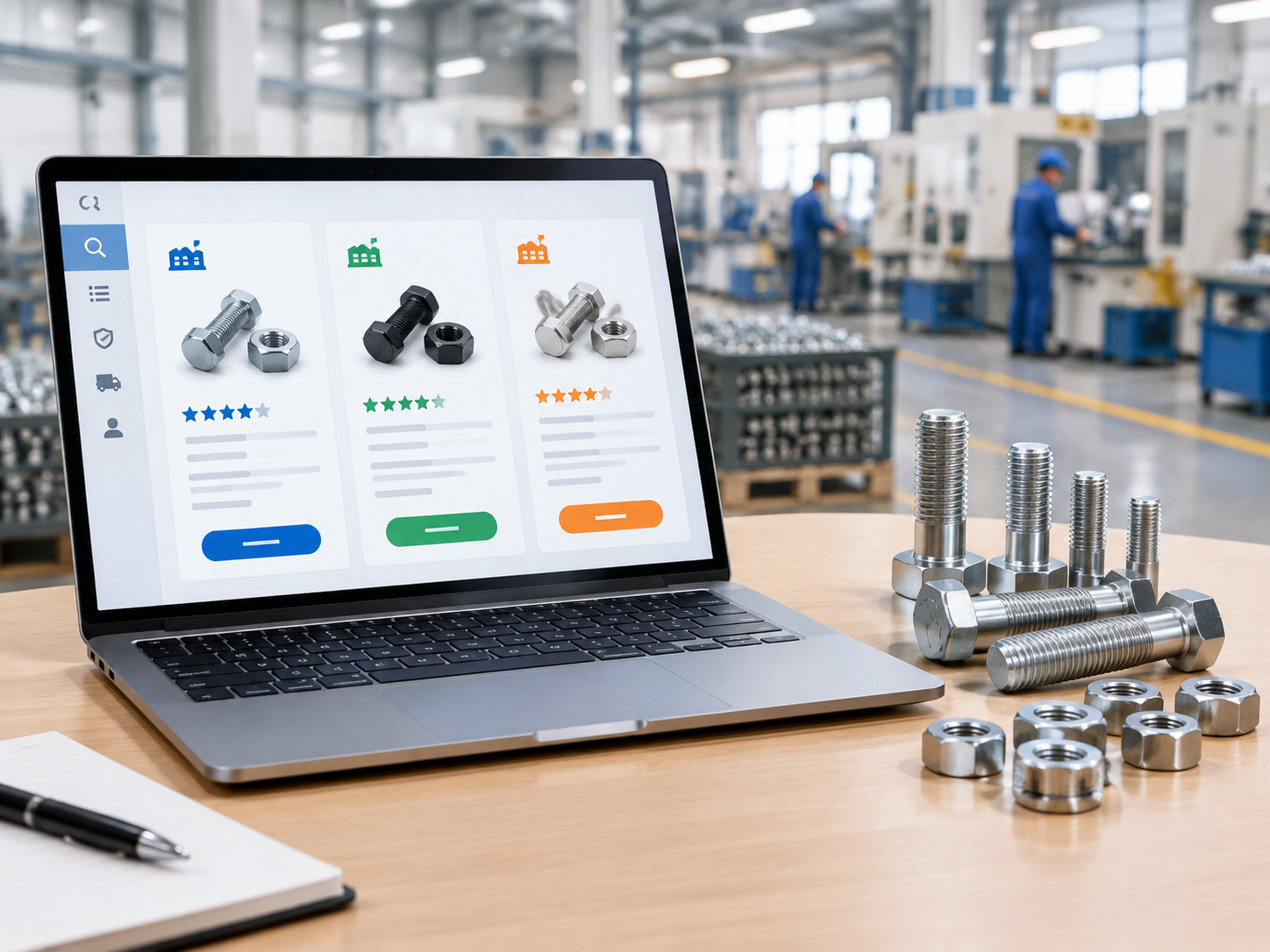
B2B Fastener PlatformsThis refers to searching for multiple fastener suppliers through a third-party platform and comparing product parameters, quotations, and lead times side by side. Some platforms also provide centralized RFQ, order management, supplier screening, or transaction protection services. Its essence is information aggregation and matchmaking.
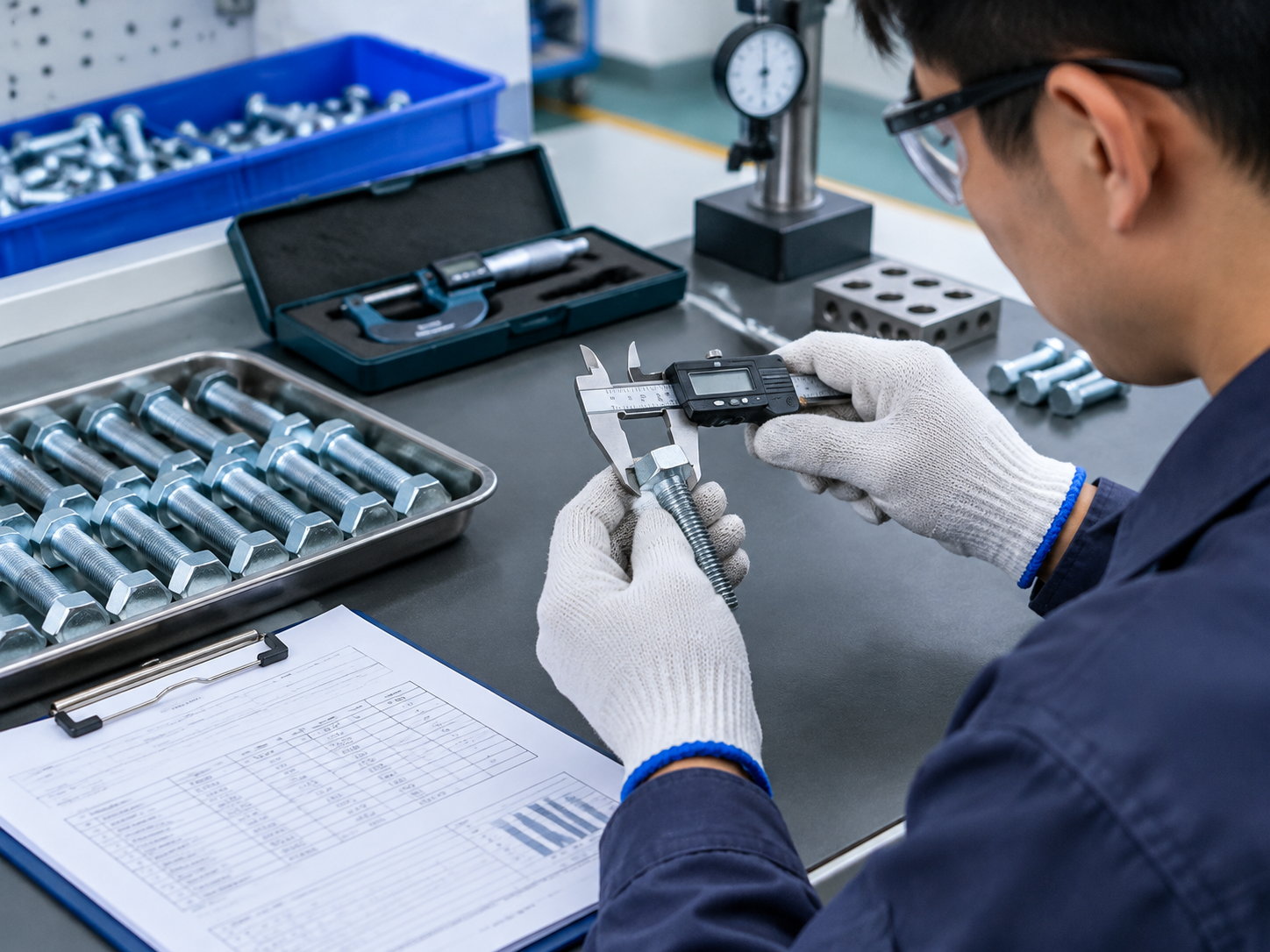
Direct Procurement from Fastener ManufacturersIn this model, the company contacts fastener manufacturers directly to communicate about materials, processes, tooling, sampling, inspection standards, and production scheduling, and places orders directly. Its essence is deep engagement between buyer and supplier.
It should be emphasized that the procurement model is not equivalent to product quality. Goods on a platform may come from manufacturers or from traders; direct procurement likewise requires the company to audit the factory's equipment capabilities, quality system, and delivery records on its own. The channel is only the path; quality depends on what you have verified.
B2B Platform Procurement: Suitable for Multi-Category Price Comparison and Rapid Sourcing
The most direct value of the platform model is efficiency. By searching once for multiple categories such as screws, nuts, bolts, and studs, you can obtain quotations from multiple suppliers within minutes, making it especially suitable for procurement needs involving small batches, many varieties, and suppliers that have not yet been determined.
- Centralized RFQ and Side-by-Side Comparison:You can submit RFQs for multiple specifications at the same time, compare quotations, minimum order quantities, and lead times, and quickly narrow down the candidate pool.
- Reference for Preliminary Screening:If the platform provides certification marks, historical reviews, or transaction protection, these can serve as auxiliary references for initial supplier screening.
- Be Sure to Verify the Supplying Entity:Confirm whether the actual shipper is a factory or a trader, and verify inventory status, governing standards, quality inspection documents, and where after-sales responsibility lies, so as to avoid equating information displayed on the platform directly with factory commitments.
- Applicable Scenarios:Trial orders, temporary replenishment, sourcing of standard parts, or companies that need to expand their pool of alternative suppliers.
For example, when purchasing hex bolts for general mechanical assembly, the common IS 1363 standard products on platforms cover both carbon steel and stainless steel materials, making them suitable for mechanical equipment assembly and general industrial use. For products with clear specifications and general demand like these, comparing prices through a platform is highly efficient. But even so, suppliers should still be required to provide material certificates and dimensional inspection records.
Direct Factory Procurement: Suitable for Stable Demand and Customized Projects
When procurement demand is stable, volumes are large, or non-standard and customized processes are involved, the advantages of direct procurement become clearly evident. Companies can communicate directly with the production side about material selection, forming processes, tooling development, sample confirmation, inspection standards, and production scheduling, making it easier to build technical collaboration in long-term cooperation.
- Continuous Repeat Purchases of Standard Parts:For bolts, nuts, and studs with stable demand, direct procurement can lock in capacity and pricing mechanisms.
- Customization Needs:Custom socket head cap screws, custom special-shaped fasteners, non-standard fastener machining, and fastener OEM manufacturing all require direct coordination with the factory on drawings and processes.
- Match Capacity by Category:When requesting quotations, you can look for factories that specialize in the relevant product category, such as hex bolt manufacturers, flange bolt suppliers, carriage bolt factories, lock nut suppliers, heavy hex nut manufacturers, and carbon steel nut factories, because different factories have very different strengths.
- Key Evaluation Points to Note:Before direct sourcing, you should assess equipment and testing capabilities, minimum order quantity, production capacity flexibility, export experience, and exception-handling mechanisms.
Taking timber-frame buildings and bracket installation scenarios as an example, DIN 571 hex head wood screws also offer both carbon steel and stainless steel material options, and are used for wood connections and bracket fastening. If such products are used in long-term bulk quantities, directly confirming the thread-forming process, head strength, and surface treatment solution with the factory often controls quality fluctuation better than repeatedly comparing prices on a platform.
Core comparison: evaluate item by item from total cost and quality to supply risk
Neither model is absolutely superior or inferior; the key is to unify the evaluation dimensions.
- Total cost:You cannot compare unit price alone. Freight, inspection costs, packaging requirements, mold costs, inventory occupation, rework losses, and line stoppage risks should all be included. Platform quotations and direct sourcing quotations must be converted on the same basis; otherwise, it is easy to reach incorrect conclusions.
- Quality consistency:Clarify material certificates, mechanical properties, dimensional tolerances, surface treatment, sampling inspection plans, and batch traceability requirements. When high loads are involved, focus on reviewing the inspection documents of high-strength bolt manufacturers and heavy hex nut manufacturers.
- Delivery capability:Confirm the delivery time differences between stock items and customized products, production scheduling cycles, partial delivery arrangements, and peak-season supply guarantee capability.
- Communication efficiency:Platforms are suitable for horizontal searching and quick price comparison, while direct sourcing from manufacturers facilitates in-depth discussion of process details. For complex projects, you can first source through a platform, then conduct on-site or document audits of key manufacturers.
- Supply chain resilience:Key materials should not rely on only a single channel; verified alternative fastener suppliers should be retained.
Choose channels according to products and procurement scenarios
Different products and different working conditions suit different channels. The following is organized by common scenarios.
- Standard general-purpose parts:For low-risk, commonly used specifications such as machine screw wholesale and expansion bolt wholesale, you can first quickly compare prices through a platform, then verify the brand, specifications, and actual supply source.
- High load or clear standard requirements:Focus on reviewing high-strength bolt manufacturers, heavy hex nut manufacturers, and supporting inspection reports, and require third-party inspection when necessary.
- Outdoor or corrosive environments:The material grade of stainless steel fasteners (such as 304, 316) and applicable working conditions should be confirmed. When looking for stainless steel fastener manufacturers, batch quality must likewise be verified, and you cannot rely only on the material name.
- Export projects:Evaluate the standard matching capability, packaging specifications, documentation experience, and delivery records of suppliers for American standard bolt exports or fastener exports.
- Specialized process channels:Hot-dip galvanized bolt suppliers, self-tapping screw manufacturers, self-drilling screw suppliers, etc., should be screened one by one according to surface treatment requirements, application scenarios, and inspection standards.
- Custom and non-standard projects:For custom bolt wholesale or non-standard part procurement, you should first provide drawings, materials, performance, quantity, and acceptance requirements, then compare sampling plans and mass production capability.
Pre-purchase checklist: make quotation results comparable and acceptable
Whether you use a platform or direct sourcing, organizing the following information clearly before inquiry can greatly reduce back-and-forth communication and subsequent disputes.
- Specification information:Product name, drawing or applicable standard, dimensions, thread specification, material, strength grade, and tolerance requirements.
- Operating condition requirements:Load magnitude, operating temperature, corrosive environment, vibration conditions, and mating components.
- Quality requirements:Inspection items, sampling rules, material or performance certificates, surface treatment requirements, and traceability methods.
- Commercial terms:Quotation validity period, minimum order quantity, delivery time, packaging method, payment terms, transportation and after-sales responsibilities.
- Supplier verification:Verify the business and production entity, relevant equipment, testing capabilities, sample test results, and past delivery performance.
Writing the requirements into the request for quotation reduces procurement risk more effectively than repeatedly haggling over the quotation.
Conclusion: Use them in combination according to procurement complexity, rather than choosing one over the other
B2B platforms and direct sourcing from manufacturers are not mutually exclusive options; mature companies usually use a combination of both.
- For multiple varieties, small batches, and the need for rapid comparison, prioritize using platforms to expand the range of options; key specifications still require sample confirmation and qualification verification.
- When demand is stable, procurement volume is large, or customized processes are involved, prioritize establishing direct sourcing cooperation with qualified manufacturers, and clarify quality agreements and delivery mechanisms.
- A more reliable path is:Platform sourcing and price comparison + manufacturer audit and trial order + long-term cooperation with qualified suppliers, and prepare backup channels for critical fasteners.
- The final decision should be based on total lifecycle cost, quality risk, and supply continuity, rather than solely on quotation level or channel label.
Although fasteners are small, they directly affect assembly quality and equipment reliability. Only by basing the choice of procurement model on one's own needs, operating condition requirements, and verification capabilities can costs be controlled while also safeguarding the quality bottom line.