2026 Fastener Procurement Guide: Shifting from Price Comparison to Supply Chain Reliability

Daniel
With experience in fastener manufacturing and export sales, we specialize in bolts, nuts, screws, self-drilling screws, fully threaded rods, and customized fastening solutions for construction, machinery, automotive, and industrial applications.
Introduction: When sourcing fasteners, the hard part is never just "finding a screw"
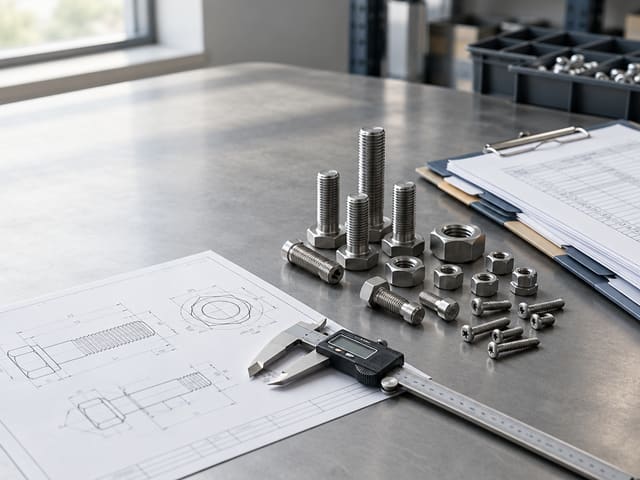
For procurement managers, structural engineers, and distributors, the complexity of fastener procurement far exceeds what outsiders imagine. Screws, nuts, bolts, and studs may look like standardized products, but their actual specifications span an enormous range: materials run from carbon steel and alloy steel to stainless steel; thread types include metric, unified, and Whitworth; surface treatments cover zinc plating, hot-dip galvanizing, Dacromet, and black oxide; strength grades range from 4.8 to 12.9; and packaging formats include bulk, small boxes, mixed packs, and automatic feeding trays. A deviation in any one dimension can be magnified on the assembly line into a line-stoppage incident.
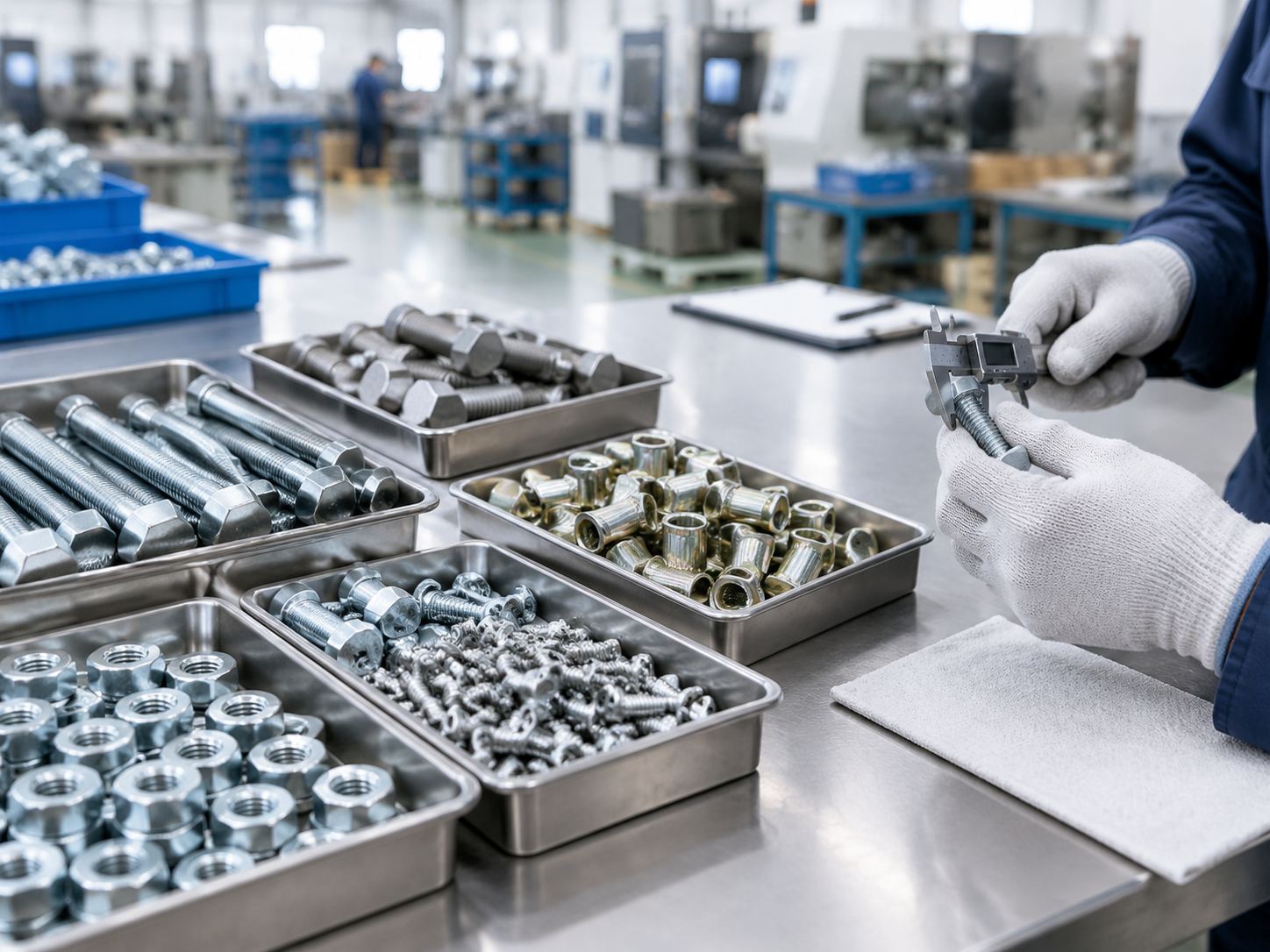
Typical risks in the procurement process include mixed incoming materials, thread damage, warehouse corrosion, unstable torque, and insufficient batch consistency. Even more troublesome is that production line stoppages caused by stockouts or delivery fluctuations often result in losses several times higher than those caused by differences in unit purchase price. In automated weighing and packaging scenarios, "wide variation in accessory specifications" is a long-standing pain point—the same order may contain both M3 machine screws and M20 heavy hex nuts. Without standardized packaging rules, traceable labels, and anti-mixing management, the receiving and sorting stage becomes a high-incidence area for quality incidents.
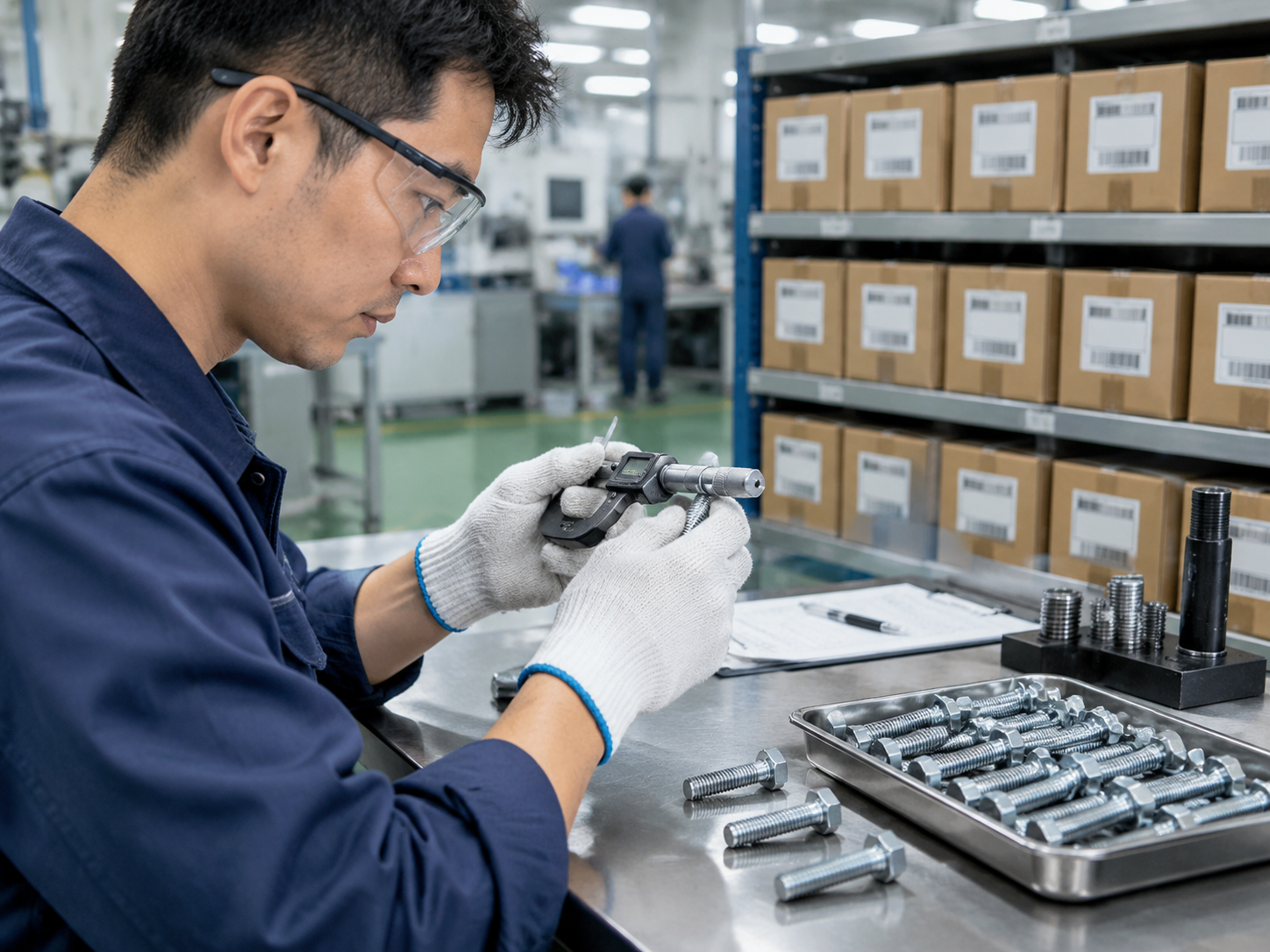
Therefore, in 2026, the focus of competition in the fastener market is shifting from simple price comparison to supply stability, quality verification, customization responsiveness, and full-lifecycle procurement cost control. Whoever can clearly explain the standards, traceability, and delivery certainty behind "a single screw" will be able to take the initiative in procurement decisions.
1. The 2026 Global Fastener Market: From Basic Industrial Goods to a High-Reliability Supply Chain
Fasteners are fundamental connecting components in fields such as automotive, machinery manufacturing, construction, energy, electrical and electronics, rail transit, aerospace, and furniture assembly. Their value lies not in the price per piece, but in the impact of connection reliability on an entire piece of equipment, an entire building, and an entire production line.
The main drivers of current market demand include: manufacturing equipment upgrades, automotive lightweighting, expansion of new energy projects, infrastructure construction, the spread of automated production lines, and the restructuring of overseas supply chains. General-purpose screws, nuts, bolts, and studs still account for large-scale procurement demand, but the value share of high-strength, anti-corrosion, locking, lightweight, and non-standard custom products continues to rise.
A principle for citing data deserves special mention: when it comes to figures such as market size, compound growth rate, and the USD 792 million for blind rivet nuts, formal articles should specify the statistical scope, forecast year, regional coverage, and original market research source, and avoid directly comparing data from different institutions horizontally. When reporting internally, buyers should also distinguish between "global market size" and "regionally accessible market"; otherwise, they may easily overestimate their bargaining space on their own orders.
2. The Blind Rivet Nut Niche: What Does a Scale of USD 792 Million Mean?
A blind rivet nut is a fastener that can form a reliable internally threaded connection under single-side operation conditions, making it suitable for assembly environments where the back side is inaccessible, the sheet material is relatively thin, or welding is not applicable. Its typical applications include automotive sheet metal, electrical cabinets, new energy equipment housings, rail equipment interiors, and furniture hardware.
Interpreting the "USD 792 million scale": the size of a niche market itself not only represents total demand, but also reflects continued investment in high-efficiency connection solutions across scenarios such as automotive, sheet metal, electrical cabinets, new energy equipment, and rail equipment. For the procurement side, this means that supply resources are extending from ordinary open-end products to closed-end, hex, knurled, large-flange, waterproof, and high-strength material products.
The key selection dimensions for blind rivet nuts include: panel thickness range, hole diameter tolerance, thread specification, pull-out and torque resistance, installation tool compatibility, corrosion resistance grade, and sealing requirements after assembly. A procurement reminder: the failure of blind rivet nuts is often not solely a material issue, but may also be related to pre-punched hole accuracy, installation force settings, tool wear, and matching with sheet material hardness. Therefore, before bulk purchasing, conducting trial installation verification is more meaningful than simply comparing unit prices.
3. Changes in Demand Structure: Which Fastener Categories Deserve the Most Attention from Buyers
High-strength connectors: High-strength bolt manufacturers serve demand from engineering machinery, steel structures, heavy-load equipment, and other sectors. During procurement, the focus should be on confirming strength grade, heat treatment process, third-party testing, and batch traceability capability. For projects with high safety-level requirements, connection pair torque coefficient or tightening axial force test data should also be required.
Corrosion-resistant connectors: Demand for stainless steel fasteners and hot-dip galvanized bolts is increasing in scenarios such as outdoor equipment, marine engineering, photovoltaic brackets, and chemical equipment. When choosing stainless steel fastener manufacturers or hot-dip galvanized bolt suppliers, the key is to compare the match between corrosion resistance and the operating environment, and to pay attention to the risk of galvanic corrosion when different metals come into contact.
Standardized industrial bolts: Hex bolts, flange bolts, carriage bolts, and others remain commonly purchased items in machinery manufacturing and building assembly. The core capabilities of hex bolt manufacturers and flange bolt suppliers are reflected in the implementation of standards systems, dimensional stability, and delivery completeness. For wood structures or bracket installation scenarios, DIN 571 hex head wood screws (carbon steel and stainless steel materials) are a common choice; their hex head design makes it easier to apply higher torque, making them suitable for wood connections and bracket fastening.
Anti-loosening and safety products: Nylon locking, all-metal locking, and special anti-loosening solutions provided by lock nut suppliers have higher value in vibration conditions, motor equipment, and transportation equipment. In threaded rod connection and support systems, DIN 6334 hex coupling nuts (carbon steel and stainless steel materials), as long hex nuts, can be used to connect threaded rods, suspended supports, and pipe supports. During procurement, attention should be paid to their length specifications and thread precision.
Self-tapping and self-drilling products: The core competitiveness of self-tapping screw manufacturers and self-drilling screw suppliers is not only unit price, but also drilling efficiency, breakage rate, surface anti-corrosion performance, and compatibility with automated screw driving.
Customized products: Custom socket head cap screws, custom special-shaped fasteners, non-standard fastener machining, and fastener OEM manufacturing will continue to benefit from equipment differentiation and small-batch, multi-specification procurement demand. Fastener suppliers capable of handling both custom bolt wholesale and standard parts supply have an advantage in response speed.
4. Breaking Down Procurement Pain Points: Why Do Nuts and Bolts of the Same Specification Differ So Much in Actual Cost?
Specification management is difficult: The same company may simultaneously purchase metric, unified, Whitworth, and non-standard parts, and mixed use of thread standards, length units, and strength markings can easily lead to mismatches. If a carbon steel nut factory simultaneously handles orders under multiple standards, its sorting and labeling management capabilities become especially critical.
Quality consistency is difficult: Passing appearance inspection does not mean passing performance inspection. Problems such as thread burrs, uneven plating, hardness deviation, decarburization, and hydrogen embrittlement may only be exposed after assembly or in service. For U.S.-standard bolt export projects, material certificates and mechanical property reports are basic thresholds.
Rust prevention and packaging are difficult: Threads are the core load-bearing area, and impact damage and corrosion directly affect connection reliability. Therefore, moisture-proof packaging, interlayer protection, and warehouse management cannot be ignored. This is especially true for sea freight export orders, where the packaging method has a direct impact on the corrosion rate upon arrival.
Delivery management is difficult: An order structure featuring multiple specifications, small batches, and emergency replenishment places higher demands on fastener suppliers' inventory depth, production scheduling capability, and export logistics coordination.
Total cost assessment is difficult: Low-priced products may bring hidden costs such as sorting and rework, assembly line stoppages, quality claims, and after-sales repairs. Procurement decisions should shift from unit price to comprehensive landed cost and risk cost.
5. Supplier Screening Framework: From "Lowest Quote" to "Verifiable Supply Capability"
Verify production and quality control capabilities: Understand whether the fastener manufacturer has in-house or stable collaborative capabilities for key processes such as cold heading, thread rolling, heat treatment, surface treatment, sorting, and packaging. Fastener manufacturers with full-process control capabilities are usually more reliable in batch consistency.
Verify standards and certifications: Confirm the ability to implement standards such as DIN, ISO, ANSI/ASME, JIS, and GB according to the application scenario; U.S.-standard bolt export projects should also verify material certificates, mechanical property reports, and experience with export documentation.
Verify the inspection system: Require corresponding reports for dimensional inspection, thread go/no-go gauges, hardness, torque, tensile force, salt spray testing, and material composition.
Verify the traceability mechanism: Give priority to fastener suppliers that can associate batch numbers, heat numbers, inspection records, and packaging labels.
Verify customized response: For projects such as custom bolt wholesale and non-standard fastener machining, evaluate the drawing review, prototyping cycle, mold development, first article approval, and mass production change control processes.
Verify service capabilities: Compare minimum order quantities, inventory policies, emergency order response, mixed packaging, overseas delivery, and after-sales quality handling mechanisms. For fastener export suppliers, also confirm whether they are familiar with the customs clearance requirements and labeling specifications of the target market.
VI. Selection Recommendations for Different Procurement Scenarios
Mechanical equipment manufacturing: Prioritize the stability of hex bolt manufacturers in strength grades, dimensional tolerances, and batch delivery; for matching nuts, focus on verifying thread engagement performance and torque behavior.
Steel structures and heavy-duty projects: When purchasing products from heavy hex nut manufacturers and high-strength bolt manufacturers, it is necessary to clarify connection assembly requirements, friction surface treatment, inspection lot rules, and on-site installation specifications.
Outdoor engineering and new energy: When selecting hot-dip galvanized bolt suppliers or stainless steel fastener manufacturers, evaluate material and coating combinations according to corrosion grade, service life, and contact corrosion risk.
Furniture, sheet metal, and light industry assembly: Carriage bolt factories, machine screw wholesale, and blind rivet nut products are more suitable for high-frequency assembly needs, with key attention to appearance consistency, assembly efficiency, and small-package accuracy.
Building installation and maintenance channels: For expansion bolt wholesale, focus on comparing substrate compatibility, load-bearing parameters, installation hole requirements, and the corresponding testing basis.
Automated assembly production lines: The feeding stability of screws and nuts, head shape consistency, magnetic/vacuum pickup compatibility, packaging cleanliness, and jamming rate are more critical evaluation indicators than unit price.
VII. 2026 Procurement Strategy: Establish a System of "Standard Parts Inventory + Critical Parts Certification + Collaborative Development of Non-standard Parts"
Establish a standard parts coding library for commonly used screws, nuts, hex bolts, and flange bolts, and unify drawing annotations, standard versions, materials, surface treatments, and acceptance requirements.
Implement dual-supplier or multi-supplier certification for critical safety parts and high-risk parts to reduce the impact of regional supply interruptions, raw material price fluctuations, and insufficient capacity at a single factory.
For performance-sensitive products such as blind rivet nuts, lock nuts, and stainless steel fasteners, establish mechanisms for sample verification, trial assembly testing, tightened inspection of the first batch, and annual review.
For custom special-shaped fasteners and fastener OEM contract manufacturing projects, adopt a phased management method of "drawing freeze - sample confirmation - small-batch trial production - mass production release."
Promote collaboration among procurement, quality, engineering, and warehousing departments, and include packaging specifications, labeling rules, anti-rust requirements, batch traceability, and incoming inspection sampling in the procurement technical agreement.
Through annual framework agreements, rolling forecasts, consignment inventory, or safety stock mechanisms, improve delivery coordination between fastener export suppliers and end buyers.
VIII. Conclusion: Upgrade Fastener Procurement from a Cost Center to a Reliability Competitiveness
The opportunities in the global fastener market in 2026 lie not only in overall demand growth, but also in upgrades in segmented scenarios such as blind rivet nuts, high-strength connectors, anti-corrosion products, and non-standard customization. Buyers should regard products such as screws, nuts, and bolts as important components affecting assembly efficiency, equipment safety, and brand quality, rather than simple low-value consumables.
It is recommended that enterprises first sort out the list of fasteners with high consumption, high failure rates, and high line-stoppage risk, and then screen partners according to the four dimensions of performance, delivery, cost, and traceability. Whether it is wood connection parts such as DIN 571 hex head wood screws or threaded rod support parts such as DIN 6334 hexagon connecting nuts, the working conditions, standards, and acceptance rules should be clarified at the selection stage.
Readers are welcome to obtain selection recommendations, sample testing, and quotation solutions from professional fastener suppliers based on drawings, operating conditions, material requirements, annual usage, and target market standards. Moving procurement forward to the design stage often reduces costs more effectively than assigning blame after a line stoppage.